


Prescription dispenser
Table of Contents
Sign up to our newsletter
As retail evolves, automation is redefining how customers shop and pay. Among the most impactful innovations is the self-checkout kiosk, which has become a standard feature across grocery stores, convenience shops, and big-box retailers. Understanding the benefits of self-checkout kiosks helps retailers make smarter operational decisions that enhance customer satisfaction and long-term profitability.
This article explores six key reasons retailers should embrace self-checkout kiosks, highlighting not only the efficiency gains but also their strategic value for future-ready businesses.
Lower Operating Costs and Optimize Labor Efficiency
One of the primary benefits of self-checkout kiosks is cost reduction. A single store associate can monitor multiple kiosks simultaneously, minimizing the need for multiple cashiers during peak hours. Retailers save on labor costs while maintaining faster checkout throughput.
Additionally, self-checkout kiosks require less floor space than traditional cashier lanes. The space saved can be used for promotional displays, seasonal items, or customer engagement zones—maximizing both revenue per square foot and operational efficiency.
Faster Transactions and Shorter Waiting Lines
Few things frustrate customers more than long queues. With self-checkout kiosk benefits like faster scanning and digital payments, customers experience reduced waiting time—often by up to 40% compared to manned checkouts.
Shoppers appreciate the autonomy of scanning, bagging, and paying at their own pace. This sense of control leads to higher satisfaction levels and stronger customer loyalty, especially among tech-savvy consumers. Retailers who emphasize speed and convenience gain a decisive edge in competitive markets.
Enable Personalized Promotions and Upselling Opportunities
Modern self-checkout kiosks are far more than payment terminals—they are interactive marketing platforms. Integration with loyalty programs allows kiosks to display personalized offers, suggest complementary products, and promote discounts in real time.
For example, when a customer scans a coffee pod pack, the kiosk can recommend a compatible coffee machine at a discount. This automated upselling converts simple transactions into strategic brand moments, strengthening both sales volume and customer engagement.
Improve Data Insights and Inventory Planning
Another of the benefits of self-checkout kiosks is their ability to generate valuable data for business analysis. Each scan, purchase, and cancellation provides insight into buying behavior, peak hours, and product popularity.
Retailers can leverage this data to optimize inventory levels, adjust store layouts, and plan restocking schedules more accurately. Over time, these analytics translate into smarter decisions, reduced waste, and stronger profitability. In an era where data drives every business decision, self-checkout kiosks provide a powerful competitive advantage.
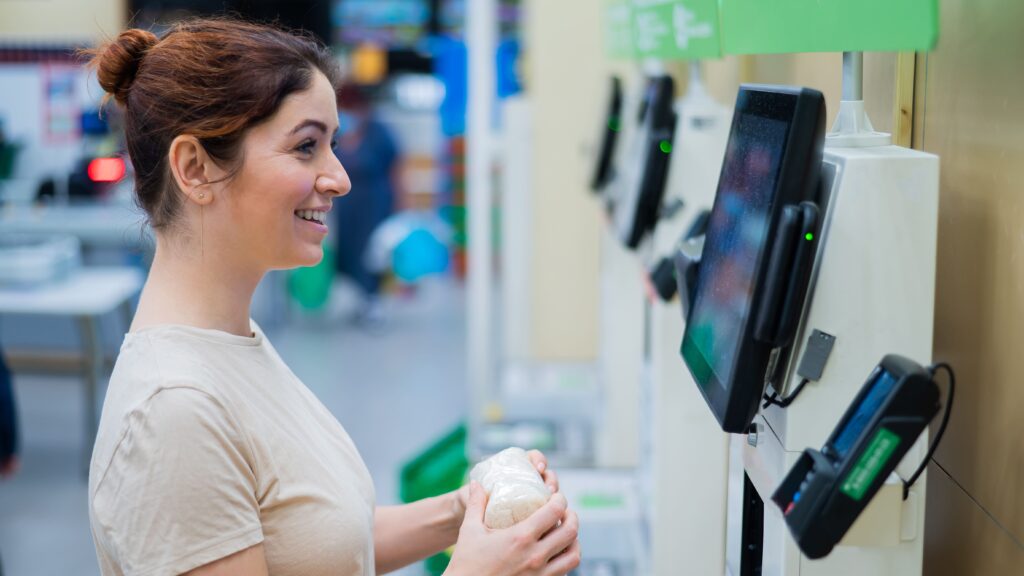
Strengthen Privacy and Enhance Customer Trust
Privacy is an underrated yet essential factor among the advantages of self-checkout kiosks. Many customers prefer scanning personal items—such as cosmetics or healthcare products—on their own rather than interacting with a cashier.
Retailers can further build trust by designing kiosks with privacy screens, secure card readers, and minimal data exposure. A discreet, customer-friendly interface boosts confidence and promotes repeat visits. This emotional comfort transforms routine transactions into positive brand experiences.
Future-Ready and Scalable Retail Technology
Adopting self-checkout kiosks positions retailers for future growth. Newer kiosk models support AI-powered item recognition, voice assistance, and mobile wallet integration—features that elevate both convenience and security.
These flexible systems can evolve as retail technology advances, offering a scalable foundation for innovation. For businesses aiming to stay ahead of market trends, the benefits of self-checkout kiosks extend well beyond immediate cost savings—they build digital resilience for tomorrow’s retail environment.
Overcoming Common Concerns
While the advantages of self-checkout kiosks are clear, retailers often raise legitimate concerns—such as theft, technical issues, or customer resistance. These challenges can be effectively managed with modern solutions:
- Shrinkage and theft: Deploy AI cameras, weight verification, and audit prompts.
- Customer confusion: Provide intuitive interfaces and trained floor assistants.
- System reliability: Use cloud-based software with remote diagnostics and automatic updates.
- High initial cost: Emphasize long-term ROI through labor savings and increased throughput.
By combining automation with human support, retailers can create a hybrid model that delivers the best of both worlds—efficiency and empathy.
Implementation Tips for Retail Success
To fully realize the benefits of self-checkout kiosks, retailers should:
- Start with pilot stores to measure adoption rates and fine-tune workflows.
- Integrate CRM and loyalty programs to enhance personalization.
- Design for accessibility, offering multilingual options and clear prompts.
- Monitor KPIs such as transaction speed, abandonment rate, and uptime.
- Provide continuous support and staff training to ensure smooth operation.
When implemented strategically, self-checkout kiosks can transform store efficiency, boost profitability, and elevate the entire customer experience.
Conclusion
The retail industry’s future is defined by speed, personalization, and data-driven decision-making. Embracing the benefits of self-checkout kiosks enables retailers to enhance efficiency, reduce costs, and deliver a seamless customer experience.
More than just automation tools, self-checkout kiosks represent a bridge between digital transformation and real-world retail success—helping forward-thinking retailers not only keep up with change but lead it.

Jane Chim
Custom Kiosk Expert Consultant
