


Prescription dispenser
Table of Contents
Sign up to our newsletter
You will need to evaluate the two most prominent kiosks: modular kiosks vs fixed kiosks. Depending on your environment, each has different benefits that affect the adaptability and durability of the machine. To find out which kiosk is most suitable for your business, continue reading.
What are Modular Kiosks vs Fixed Kiosks?
Understanding the difference between modular and fixed kiosks will be the key to choosing the best interactive kiosk design for your needs. Whether you belong to sectors like retail, healthcare, entertainment, or public services, you can take advantage of these kiosks.
What are Modular Kiosks?
A modular kiosk is a small, compact kiosk that has a movable design that is easily interchangeable. It can be assembled and disassembled to fit new configuration needs. It allows your business to adapt to different functions or spaces quickly and efficiently.
What are Fixed Kiosks?
A fixed kiosk is a permanent configuration specifically designed for one select location. It is installed or built to suit the environment it is stationed in, whether outdoors or indoors. It can be tailored to meet a long-term service goal and often blends with the location’s architecture or landscaping.
Benefits of Modular Kiosks

Modular kiosk designs have numerous benefits that can improve your business’s overall work efficiency and operational capacity. A few notable benefits are flexible design and placement, ease of scalability, simple maintenance needs, cost-effectiveness with better return on investment (ROI), and compatibility with third-party services.
Flexible Design and Placement
Modular kiosks are designed with mobility and adaptability in mind. They allow businesses to rearrange and reconfigure components to match changing requirements through seasons or objective needs. They are perfect for on-the-go business, trade shows, and events.
Easy to Scale
Modular kiosks also have the ability to support business growth or downsizing by having to replace the terminal. It is great for start-up companies or expanding businesses. New modules can be easily integrated based on new services or functionalities.
Simple Maintenance and Upgrades
Modular kiosks are quite easy to repair due to the availability and ease of replacing interchangeable parts. Each component can be adjusted or enhanced without completely taking the kiosk offline. This is great for reducing downtime and maintenance costs for the business.
Cost-Effective with Better ROI
These kiosks are reusable and extremely scalable. This increases their value for businesses, as they are very cost-effective over time. They can be adapted for different uses and offer companies numerous ways to maximize their investment.
Overall, modular kiosks can offer a better return on investment for companies with diverse needs.
Works with Third-Party Services
These kiosks can seamlessly integrate with third-party services, such as payment processing systems, ticketing solutions, and social media or informational platforms. These kiosks are extremely versatile and reduce the need for additional equipment.
Benefits of Fixed Kiosks
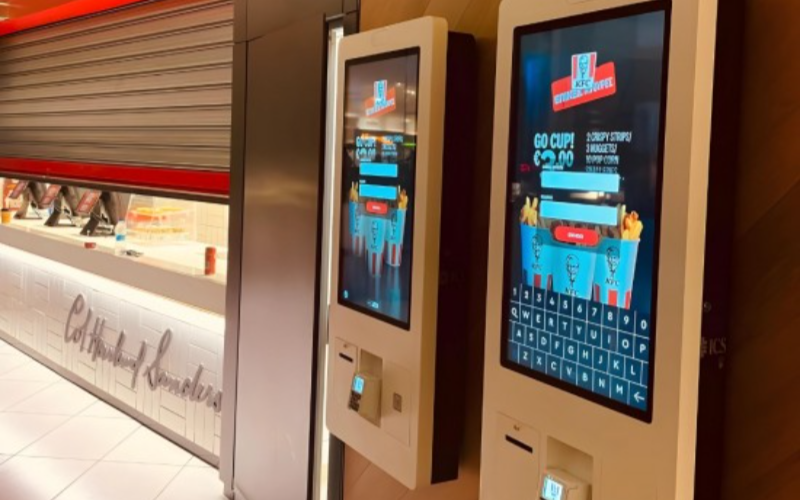
Fixed kiosks can provide several huge benefits to a diverse range of businesses. They are built using durable materials to make them stronger and more long-lasting, can be customized based on purpose or location, and are great permanent options for set locations.
Strong and Long-Lasting
Fixed kiosks are designed to withstand harsh environments such as outdoors with high UV exposure, wind, rain, and humidity. They are built with extra durable components and strong materials to last longer in high-traffic areas and prolonged use.
Custom Designs for Specific Needs
Unlike modular kiosks, fixed kiosks are often designed with a main purpose in mind. This tailored solution aligns perfectly with the business objective, but cannot be easily modified. They feature unique branding for one specific space.
Perfect for Set Locations
Fixed kiosks are installed in areas that will not change, such as airports, shopping centers/ malls, and offices. The terminals are usually permanently affixed or built into their environments to suit the general aesthetics while being functional.
Comparing Modular and Fixed Kiosks in Use

Modular kiosks and fixed kiosks often differ in their applications for various businesses. Each uniquely offers certain advantages depending on the industry or environment it will be installed. We will look at how they work in retail spaces, offices, and events.
For Retail Stores
Modular kiosks can be useful for pop-up shops for clothing or merchandising outlets to promote seasonal sales and new launches. They are easily adaptable regardless of the store space and can move around the mall or commercial premises to increase reach.
On the other hand, a fixed kiosk is ideal for permanent checkout stations throughout a store. It can provide accessible customer support and reliable service during the shopping experience.
In Offices and Public Spaces
Modular kiosks are great spaces that reconfigure the layout multiple times throughout the year, like coworking spaces or temporary offices. Whereas, fixed kiosks are long-term installations that accommodate visitor check-in or customer service at government offices.
For Events And Exhibitions
Modular kiosks are interchangeable and versatile for events, such as trade shows, festivals, parties, etc. In comparison, fixed kiosks are impractical for event spaces due to their immobility; only recurring events would benefit from a fixed kiosk at a specific location.
Future of Kiosk Design

Kiosk design ideas and recommendations frequently change in this digital age. You must adapt where necessary to suit industry standards or customer preferences. As demand and taste evolve, there are new developments expected from self-service kiosks.
Growing Popularity of Modular Options
Modular kiosks are more cost-effective for businesses due to their scalability and adaptability. As such, the demand and popularity have increased beyond expectations in recent years. Businesses seek solutions that consistently improve customer satisfaction, so they will most likely use a modular kiosk to boost revenue.
Advances in Kiosk Technology
Kiosks are now using new materials that enhance energy efficiency and digital integration. This has positively affected modular and fixed kiosk designs. You can use touchless interfaces and better connectivity options worldwide.
These technological advancements have made it possible for modular kiosks to use plug-and-play services, which makes them easier to maintain. You can also add artificial intelligence software, which personalizes each interaction and improves customer service capabilities.
Conclusion
Both modular kiosks and fixed kiosks have several advantages. They are useful for different aspects of the business depending on location, purpose, and overall industry. If you value adaptability and flexibility, a modular kiosk is the way to go. However, if you need a long-lasting solution for high-traffic environments, a fixed kiosk is best.
Once you understand the benefits of each kiosk, the choice between which is more useful will be easier for you. Both play crucial roles in boosting revenue and improving customer service. If you want to design your modular or fixed kiosk today, contact us for a free quote.

Kitty Tan
Custom Kiosk Expert Consultant
Kitty is a kiosk expert at FlyXing. With extensive knowledge and experience in designing and manufacturing self-service kiosks, Kitty specializes in creating customized solutions to meet diverse industry needs.


