


Prescription dispenser
Table of Contents
Sign up to our newsletter
Traditional kiosks first appeared in shopping malls, airports, and museums as simple information points. Over the years, the design and functionality of a kiosk ordering system have undergone significant transformations.
Understanding Smart Kiosks vs Traditional Kiosks
While many businesses integrate kiosks into their operations, understanding smart kiosks vs traditional kiosks is relevant. While one is more technologically advanced, the other requires minimal repairs. Let’s look at what each kiosk entails.
What are Smart Kiosks?

Smart kiosks are modern, technologically advanced systems designed to offer highly interactive and automated solutions to users. A smart kiosk often operates as a self-service hub, capable of performing complex tasks like processing payments and collecting data.
Some examples are kiosk ordering systems in fast-food restaurants, ticket machines at train stations, and interactive kiosks that may be installed in large malls. Integrated software and cloud computing feature heavily in smart kiosks, thus allowing real-time updates, remote management, and higher levels of customer interaction.
What are Traditional Kiosks?
Traditional kiosks are simple systems designed for limited, often manual functions. Typically, they lack advanced technological features like touchscreens or automated processes.
These kiosks primarily serve as information centers or physical stalls. They require human assistance and offer essential services like pamphlet distribution or non-interactive digital signage.
While effective for straightforward tasks, traditional kiosks often fall short in scalability and convenience compared to their smart counterparts. They require more human intervention and are less flexible in adapting to changing customer needs or business requirements.
Benefits of Smart Kiosks
As the world shifts toward automation and customer-centric solutions, smart kiosks give businesses an added edge that regular kiosks cannot provide. Here are some key benefits of smart kiosks:
Faster Service

Different intelligent kiosks are designed for smooth operations, reducing waiting times and allowing customers to receive services quickly.
For example, self-ordering kiosks in restaurants enable customers to order for themselves without joining long queues. This efficiency increases customer satisfaction while allowing the business to serve more people in a limited time, increasing revenue potential.
Better Privacy and Security
With the integration of secure payment systems and biometric authentication, modern smart kiosks protect sensitive customer data. These self-service kiosks keep transactions private, lowering fraud risks.
Saves Money Over Time

Even though smart kiosks might mean a higher initial investment, they tend to be cost-effective in the long run for businesses. With smart kiosks automating processes like ordering, ticketing, or giving out directions, they reduce operational costs.
Easy for Everyone to Use
Smart kiosks are designed to be intuitive for users of any age. With large touchscreens, intuitive menus, and accessibility features, including voice commands or multilingual support, anybody can use them. Their simplicity encourages repeated usage, improving customer retention rates.
Gives Useful Business Data
Smart kiosks are not just interactive tools but a powerhouse for collecting data. They amass valuable information on customer needs, transaction history, and peak usage time. All this data can be utilized by businesses for effective marketing strategies, inventories, and operational strategies.
Benefits of Traditional Kiosks
While smart kiosks have taken the lead over the years, traditional kiosks still seem to hold their own within different spheres. Here are the benefits of traditional kiosks:
Simple and Reliable
Traditional kiosks only have essential functions, so they have fewer moving parts and will not depend on more sophisticated technologies. For this reason, kiosks tend to suffer less often from technical malfunctions.
Their simplicity guarantees the ability to function in rough environments or under harsh weather conditions with less frequency of maintenance.
Costs Less to Start

One of the most significant advantages of traditional kiosks is their affordability. They require minimal upfront investment compared to smart kiosks and are thus, accessible even to small businesses and startups.
Easy for Some People to Use
Traditional kiosks often rely on human interaction or familiar low-tech solutions, which might be a plus for specific customer demographics.
They also do very well in situations where face-to-face interaction is preferred. They work well for selling tickets at a local event or as personalized guidance at an information booth.
Problems with Smart Kiosks
Despite advanced features and numerous benefits, smart kiosks come with their share of drawbacks. Below are some issues associated with smart kiosks:
Costs More to Set Up
One of the significant challenges of smart kiosks is the high cost initially associated with their setup.
Setting up a smart kiosk does not come cheap, from the simple hardware costs to the software development and backend support. This financial obstacle might be a discouraging aspect for small businesses or startups that seek economic solutions.
Can Have Technical Problems
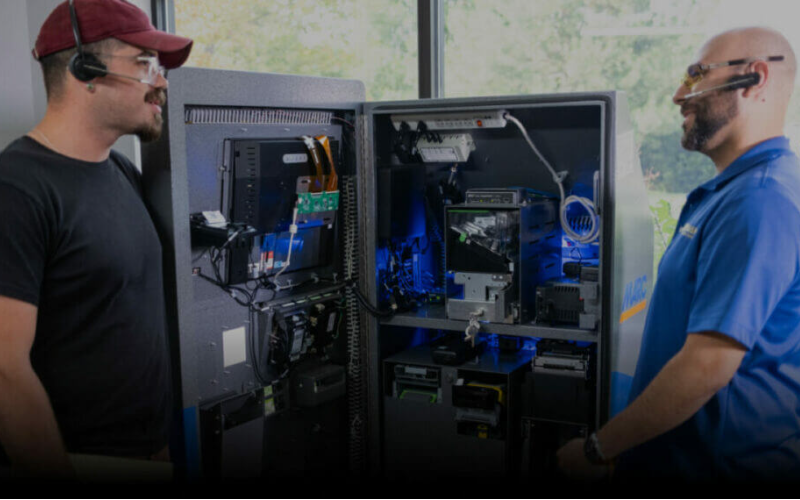
Also, smart kiosks rely heavily on advanced technology and are, hence, more prone to technical glitches and system failures. Software crashes and connectivity issues can be promoted by malfunctioning hardware parts, such as touchscreens, leading to delays, frustrated customers, or even loss of revenue.
Needs Regular Updates and Repairs
Smart kiosks require software upgrades from time to time, maintenance of hardware, and repairs, which are costly. Additionally, some of the mechanical parts are likely to break down and may require frequent maintenance.
Businesses that want to install smart kiosk systems must consider such recurring expenses while evaluating the overall cost of ownership.
Problems with Traditional Kiosks
While traditional kiosks have proven to be unfailing assistants for businesses for decades, their simplicity also has many drawbacks. Below are some of their most common problems
Can Only Do Basic Tasks
Traditional kiosks are designed to be simple. They can only offer primary services such as static information, a ticketing stall, or a simple sales stall.
Traditional kiosks cannot handle complex tasks such as secure payments or personalized recommendations, which are carried out by smart kiosks. Human intervention is highly utilized in their operation.
Slower for Customers
Traditional kiosks are usually slower in service. Sometimes, it takes time for a customer to reach a member of staff or go through displays that are not interactive.
Suppose there is a kiosk serving ticketing services; there could be pretty long queues, particularly during peak hours. This can be inefficient because customers may get frustrated and avoid using the service again.
No Business Data Tracking
Traditional kiosks have a significant disadvantage because they cannot track or analyze data. In the modern-day world of information, businesses depend highly on data analysis.
Smart kiosks, therefore, outshine traditional kiosks in this capacity, offering insights into customer use, behavior, and preferences.
How Kiosks Will Be Used in the Future
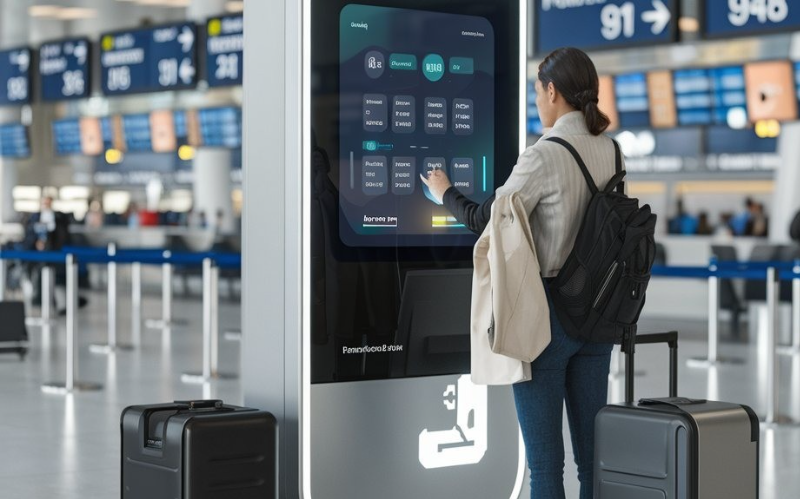
As technology progresses, kiosks might be increasingly deployed in several industries. How kiosks are poised to change these industries in the next few years is discussed below.
In Stores
Next-generation kiosks are going to benefit the retail industry greatly. Future kiosks will help the shopping experience to be quicker and smoother. Advanced AI algorithms will also allow kiosks to identify items, process payments, and offer product recommendations.
Kiosks will be a touch-point for redeeming loyalty reward miles or activating special discounts for regular customers. Through analysis of shopping habits, kiosks will also provide customers with selective promotions.
In Healthcare
Future kiosks in the healthcare sector will be imperative in driving efficiency and improving patient care. Kiosks, with video conferencing capability, will enable remote consultations with health professionals. It will increase access to healthcare in areas that are rural or otherwise underserved.
Smart kiosks will include biometric sensors enabling patients to check their blood pressure, heart rate, and oxygen levels. Such data gathered may be shared right away with medical professionals for real-time monitoring.
In Banks
Future banking kiosks will fill the gap between traditional banking and online services in the financial sector. Advanced ATMs will do much more than just issuing cash. Future kiosks will provide services like opening accounts, applying for loans, and transferring funds without human interference.
Smart kiosks would utilize AI to give personalized financial advice by guiding customers in selecting appropriate banking products according to their profile and objectives.
Conclusion
From simple traditional devices to advanced smart systems, kiosks have revolutionized how businesses interact with customers. Yesterday was the best time to integrate kiosks into your business operations; now is the next best time.
Whether you want a smart kiosk with advanced features or a simple but effective kiosk, contact us today and let us help you make a smart choice that will fit your business.

Kitty Tan
Custom Kiosk Expert Consultant
Kitty is a kiosk expert at FlyXing. With extensive knowledge and experience in designing and manufacturing self-service kiosks, Kitty specializes in creating customized solutions to meet diverse industry needs.


