


Dispensador de recetas
Tabla de contenidos
Suscríbete a nuestro boletín
Else displays provide an easy way to grab attention in crowded areas and can be applied in retail, education, or public places. Ely allow for quicker services and more exciting education.
This article explores the functioning of interactive displays in kiosks and discusses how they help businesses remain competitive.
Comprendiendo las pantallas interactivas en quioscos

Puedes explorar cómo las pantallas interactivas de quioscos transforman las interacciones de los usuarios y mejoran la eficiencia empresarial.
Definición y funciones básicas
An interactive kiosk is regarded as a virtual technological device primarily having a touchscreen.
It is mainly designed to enable customers to access information and program documents on their own. Such kiosks form a totally enclosed system out of a panel PC and its peripherals plus software with many options.
Usos comunes en diversos entornos
Ely use touch screens and other interactive features to provide dynamic information. Consumers can easily touch the content in the kiosk.
As an example, the kiosk lets the users fill in the forms, buy tickets, read barcodes/QR codes, touch NFC cards, purchase products, and obtain information without staff assistance.
Interactive kiosks, widely deployed in various industries, are favorable for businesses of all sizes. InLas pantallas interactivas para museos ayudan en la participación en tiempo real con objetos antiguos.
Tecnologías detrás de las pantallas interactivas

El adoption and integration of interactive displays to encourage cooperation in classrooms and workplaces are growing. This trend is likely to rise as there is now more demand for interactive classroom displays rather than supply for these displays.
Education on these interactive displays is still lacking for many individuals, especially in the office and school setting.
Not everyone will utilize such interactive technology. Today, interactive displays for education employ different types of touch methods.
It is possible, however, to use some form of screen contact on all technologies, but these technologies differ in their conditions of use and the problems they solve.
Tipos de Tecnología de Pantalla Táctil
One of the most critical components of interactive displays today is the touchscreen interface, which allows users to operate devices directly with their fingers.
Pantalla táctil technology comes in a variety of shapes and sizes and has specific advantages and disadvantages with each type.
A resistive screen responds when it is pressed, so only a single touch is required.
Capacitive display screens utilize a capacitance-sensitive transparent conductive layer to detect motions. It enhances sensitivity, response and enables multi-touch.
Resoluciones de Pantalla e Interactividad
One of the most common definitions of a display resolution, expressed in terms of horizontal and vertical pixels, ‘width by height,’ is the total number of individual pixels the designated screen can show.
El resolution selected significantly affects the quality and sharpness of images on interactive displays.
Resoluciones Típicas:
- Alta Definición (1280 x 720): Principalmente adaptada para pantallas interactivas más pequeñas.
- La mayoría de las pizarras interactivas vienen con una resolución de 1280 x 800.
- 1366 por 768 se encuentran generalmente en pantallas promedio.
Tecnología Táctil por Infrarrojos
At this time, infrared (IR) technology is the most prevalent way for interactive screens to detect touches. El bezels around an infrared touch panel often include hundreds of these light-emitting diodes and receptors.
Light beams from these diodes intersect horizontally and vertically, forming a grid covering the whole panel.
Tecnología Táctil Capacitiva Proyectada
Projected capacitive touch technology (PCAP) is usually used when an interactive display does not depend on infrared light to detect contact.
El majority of today’s smartphones use PCAP for interaction. Additionally, PCAP technology has established a firm foothold worldwide as an easy-to-understand and best interactive display for business.
Características Clave de las Pantallas Interactivas Modernas
Impressive screen display quality, touch capability, OS compatibility, user-friendliness, simplicity of setup and use, collaboration capabilities, cost-effectiveness, security, portability, and complimentary training are all essential elements of the best interactive displays.
Else screens have a lot of potential, including 4K ultra-high quality, touch capabilities, operating system compatibility, tools for collaboration, low price, security, and mobility. Proximity sensors, screen recording, and accessibility tools are other features.
Capacidades Multitáctiles
El touchscreen experience should seem natural and familiar so users can seamlessly annotate, highlight, move items, and write without drag. Several popular interactive displays allow users to use ten dual-touch points.
Furthermore, the screen can recognize various forms of touch, including those from a stylus, fingers, and palms, opening up even more possibilities.
Procesamiento de Datos en Tiempo Real
El best interactive displays for education is a one-stop shop that includes all the necessary software and learning applications for the classroom.
El program for different displays allows for easy interactive lessons and activity creation. Teachers can use it to include material like photographs, videos, slide presentations, and questions to assess students’ knowledge.
Biblioteca interactive displays that sync with cloud accounts allow users to access their work from anywhere, anytime. Cloud storage will enable students to continue working together on projects even when they can’t physically meet.
Interfaces Fáciles de Usar
Muchas pantallas interactivas inteligentes presumen de compatibilidad con sistemas operativos principales como Windows, macOS y Android para fomentar su uso. Al hacerlo, los consumidores pueden ver material directamente desde el panel de visualización, sin necesidad de conexión a una PC.
Cómo las Pantallas Interactivas Mejoran la Experiencia del Usuario

Proporcionar sugerencias personalizadas, datos en profundidad, actividades entretenidas e integración con redes sociales puede mejorar la experiencia del cliente.
Retroalimentación e interacción inmediatas
Interactive visitor information displays have radically altered how users interact with technology by allowing instantaneous responses and the transmission of tailored material.
Stores, schools, and public areas may all benefit significantly from these additions. Users can interact with the material and see the effects in tiempo real, lo que mejora toda la experiencia.
Entrega de Contenido Personalizado
Interactive retail displays may modify information according to users’ actions and choices to provide more tailored suggestions and experiences.
Businesses may keep their material up-to-date with the latest deals and information using dynamic content management.
This way, consumers will always have access to the best stuff. Interactive displays are already a vital tool in many sectors, and their ability to build entertaining and immersive experiences will only increase as technology advances.
Características de Accesibilidad
Interactive art displays have become indispensable in many settings because they can provide interesting material and essential accessibility features that improve the user experience for people with different requirements.
Key accessibility elements include:
- Ajustes de tamaño de fuente y contraste.
- Capacidades de texto a voz.
- Alternativas para interacción sin contacto.
- Sistemas de retroalimentación táctil.
- Personalización de la interfaz de usuario.
We must follow inclusive design principles to ensure everyone can enjoy and benefit from our products, increase engagement, and reach more people.
Advanced interactive displays integrate AI and sensor technologies to dynamically alter information depending on human interactions, such as face recognition, to make user interactions more relevant and engaging.
Desafíos y Soluciones en la Tecnología de Pantallas Interactivas

Desarrollar y construir programas exitosos, considerando diferentes herramientas y tecnologías, y superar otros obstáculos asociados son algunos de los desafíos de aplicar tecnología de aprendizaje interactivo.
Manejo del Deslumbramiento y la Visibilidad al Aire Libre
Unlike regular indoor displays, which usually range between 300 and 500 nits, outdoor LCD panels are built to withstand intense sunlight with much greater brightness levels, frequently surpassing 2,000 nits.
This ensures the material can be seen well even when the sun is directly above.
Garantizando Durabilidad y Longevidad
Sturdy housings protect outdoor displays from dust, rain, and high temperatures.
El degree to which these enclosures effectively seal against dust and moisture incursions is indicated by their IP (Ingress Protection) rating. If the display has a high clasificación IP (IP65 o IP66), está bien protegida contra las condiciones ambientales.
Elre is still a need to secure interactive display technology against theft or vandalism.
Implementing strong password rules and multi-factor authentication (MFA) to keep hackers out of your company’s systems and data would help.
Software system patching and updates, improved encryption methods, network segmentation, and micro-segmentation may all work together to lessen the effect of unwanted access.
Monitoring and analyzing user activity may also help you respond actively to suspicious actions or attempts at illegal access.
El Futuro de las Pantallas Interactivas en Quioscos
El último informe estima que entre 2024 y 2029, el mercado de quioscos interactivos se expandirá desde su valoración de 2024 de $33,900 millones a unos asombrosos $48,800 millones, con una tasa de crecimiento anual compuesto (CAGR) del 8.9%.
Integración con IA y Aprendizaje Automático
Interactive AI and ML kiosks will transform several industries’ user engagement and operational effectiveness. Kiosks powered by artificial intelligence can track user actions in real time, enabling customized content suggestions and delivery.
Not only does this make users happier, but it also makes customers more loyal. Replacing human workers with AI-powered kiosks may significantly reduce wait times and operating expenses.
From simple point-of-sale devices, they are transforming into versatile platforms that can handle several tasks, including self-service check-ins, information distribution, and ticketing.
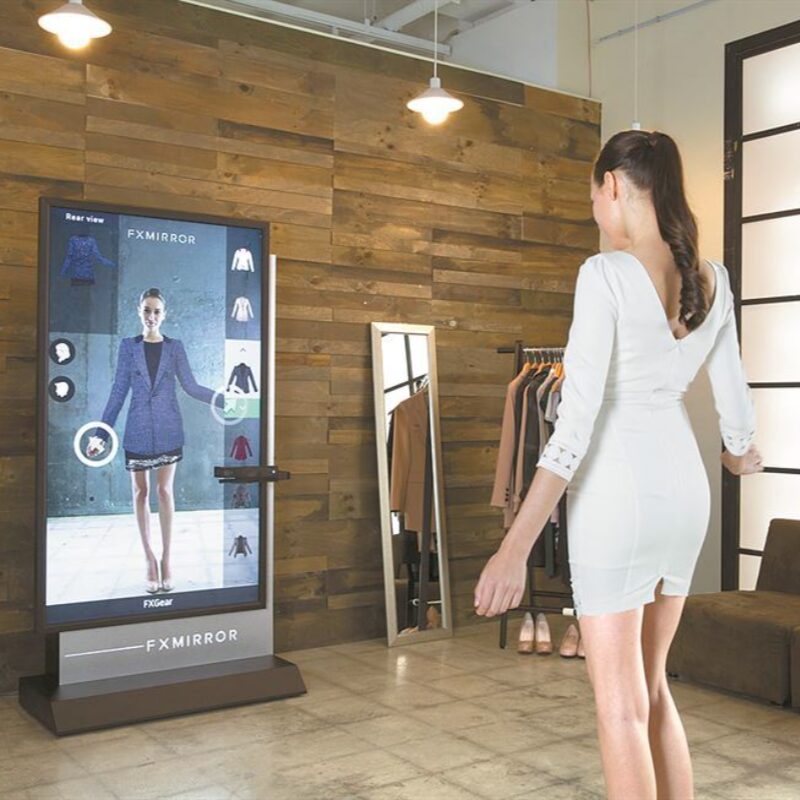
Similarly, augmented reality (AR) and other forms of artificial intelligence are finding their way into retail kiosks, allowing customers to experience products firsthand.
El ever-expanding capabilities made possible by developments in artificial intelligence and machine learning bode well for the future of interactive kiosks.
Profitability, customer satisfaction, and operational efficacy are all expected to rise in tandem with the development of these technologies.
Tecnologías de Mantenimiento Predictivo
Business operations and client interaction are poised for a revolution with the integration of predictive maintenance technology in interactive displays.
This innovation uses data analytics to foresee when machinery may go down, enabling prompt repairs.
To detect trends and anticipate possible breakdowns, AI algorithms examine tiempo real data collected from sensor-equipped kiosks, which include use patterns, temperature, and operating conditions.
If abnormalities are found, maintenance crews are notified, allowing them to make fixes ahead of time.
Predictive maintenance has benefits, including minimizing downtime, optimizing costs, and elevating the user experience.
Integrating artificial intelligence, multi-sensory experiences, and mobile devices will be some of the subsequent developments in interactive kiosks.
Conclusión
Interactive kiosk displays are crucial to shaping interactions between businesses and their customers. Else displays improve the user experience by providing rapid feedback, delivering personalized content, and having intuitive interfaces.
Ely can be easily integrated with cutting-edge technologies such as AI and ML and work in various scenarios. Else screens aim to simplify operations while anticipating user needs by analyzing data in tiempo real and utilizing predictive maintenance.
However, glare, durability, and security problems require constant monitoring.
Companies need to put money into interactive displays and keep improving them to keep up with user expectations and technology standards.
Making ordinary tasks more interesting paves the path for future interactive technologies in both public and private spheres.
Are you ready to take your business to the next level with interactive kiosks? Ponte en contacto con nosotros de inmediato para una consulta gratuita y descubre cómo nuestras opciones de pantalla pueden interesar a tu audiencia y aumentar las ventas.

Kitty Tan
Consultor Experto en Quioscos Personalizados
Kitty es una experta en quioscos en FlyXing. Con amplios conocimientos y experiencia en el diseño y fabricación de quioscos de autoservicio, Kitty se especializa en crear soluciones personalizadas para satisfacer diversas necesidades de la industria.


