




Dispensador de recetas
Tabla de Contenidos
Suscríbete a nuestro boletín
Este blog te mostrará cómo estos sistemas de pedidos digitales pueden aumentar las ventas, reducir los tiempos de espera y mejorar tu experiencia gastronómica. ¿Listo para ver el futuro de la comida rápida?
Por qué los Kioscos de Autoservicio están en Auge
Los kioscos de autoservicio han explotado en popularidad, ya que los clientes ahora esperan un servicio más rápido con menos contacto humano. Estos sistemas digitales llenan un vacío crítico para los dueños de restaurantes que enfrentan escasez de personal y costos laborales crecientes.
Evolucionando para Satisfacer las Preferencias del Consumidor
Customer habits have shifted dramatically in recent years, pushing restaurants to adapt quickly. The NPD Group reports a stunning 117% increase in digital ordering since the COVID-19 pandemic began.
This surge shows how much people now prefer touchscreen kiosks and contactless ordering options. A recent survey backs this up – 73% of customers favor self-service technologies that reduce their need to interact with staff.
Digital self-service kiosks aren’t just a trend; they’re a direct response to what you want as a modern diner.
You might notice more interactive menu displays in your favorite restaurants for good reason. Tillster’s research found that 65% of customers would visit restaurants more often if kiosks were available.
These new tools help people with food allergies or sensitivities see menu details without talking to the staff. The numbers show it clearly; you want faster and more private ways to order, and that’s changing how restaurants serve you.
Abordando la Escasez de Personal

Escasez de personal hit restaurants hard in recent years. Los quioscos de autoservicio ofrecen a smart solution to this pressing problem. These automated ordering systems let customers place orders without staff help, reducing the need for front-counter employees.
Major chains like McDonald’s have already proven this works – they’ve kept sales strong while using fewer workers. The numbers back this up too. Moe’s Southwest Grill in Pittsburgh even created kiosk-only stores that run with smaller teams.
During las horas pico, these touchscreen ordering terminals handle multiple customers at once, something a limited staff simply can’t match.
Your restaurant can maintain service quality even with fewer team members on the floor. Self-service kiosks take over basic ordering tasks, freeing up your existing staff to focus on food preparation and customer service.
Studies from Tillster show customers actually prefer these digital ordering platforms when lines get long – 75% choose kiosks over cashiers if the cashier line exceeds 5 people. This jumps to 91% when the line reaches 10 people.
These customer-operated terminals help you serve more guests efficiently without scrambling to hire in a tight labor market.
Beneficios Clave de los Quioscos de Autoservicio

Los quioscos de autoservicio ofrecen muchos beneficios para los restaurantes de servicio rápido. Estas soluciones digitales aumentan las ganancias al mismo tiempo que hacen a tus clientes más felices.
Mayores Valores de la Cuenta
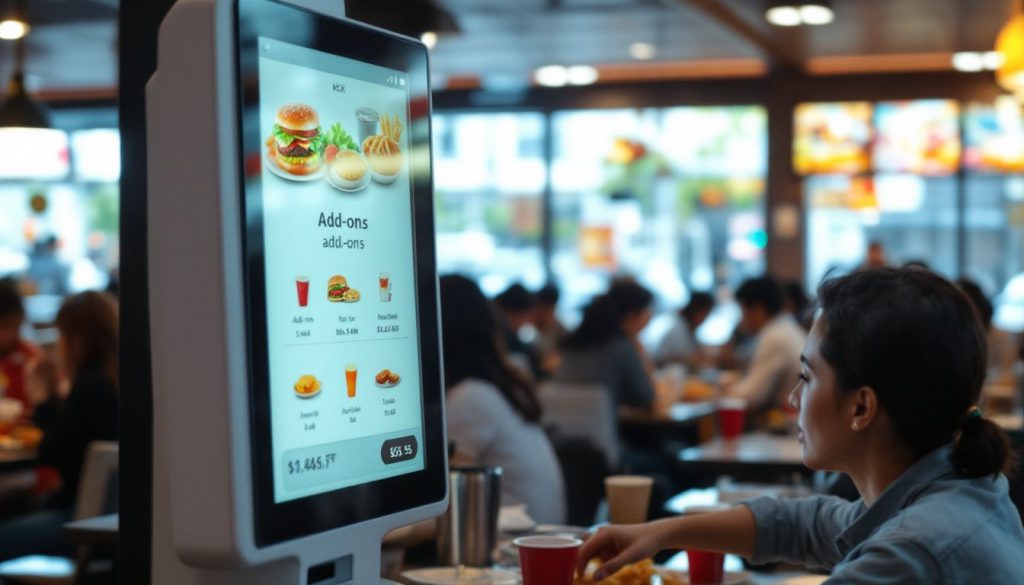
Self-service kiosks boost your restaurant’s bottom line through larger order values. At BestKiosk, I’ve seen firsthand how our kiosk systems drive up sales by showing appealing images and suggesting add-ons at just the right moment.
The numbers speak for themselves, McDonald's reportó un aumento del 30% en el valor de la cuenta, con usuarios de quioscos gastando aproximadamente $1 más por pedido. Taco Bell experimentó un cambio aún más dramático with digital orders bringing in 20% more revenue than cashier-placed orders.
Kiosks excel at smart upselling without the pressure customers might feel from human cashiers. Your guests can browse at their own pace and often add items they might not have considered.
McDonald’s found that 20% of customers added drinks when prompted by kiosks, while Chili’s boosted dessert sales by 20% after adding table kiosks. The touchscreen experience makes menu optimization easier as you gather data on what your customers actually want.
Tiempos de Espera Reducidos
Kiosks cut your wait time by almost 40%, based on Appetize data. You won’t stand in long lines while staff takes orders during lunch rush. These smart machines process multiple orders at once, unlike a single cashier who handles one customer at a time.
I’ve seen restaurants transform their busiest hours with these systems as what used to be chaotic lunch periods now run smoothly with fewer staff members. The kiosks handle order entry while employees focus on food preparation and delivery.
This creates a faster, more pleasant experience for everyone.
The technology also removes common delays caused by communication errors. Your order goes directly to the kitchen exactly as you entered it. No more mishearing “no onions” as “extra onions.” During peak hours, this accuracy speeds up the entire process from ordering to receiving your meal.
Restaurantes on tight budgets benefit too, as they need fewer workers during busy shifts while still serving more customers efficiently.
Precisión Mejorada en los Pedidos
Self-service kiosks put you in control of your order, cutting down mistakes that happen during busy times. You place your order directly into the system, which means no staff member has to interpret what you want.
Our customers report fewer errors since they can see their selections on screen and confirm before payment. These kiosks display all menu options clearly, making it easy to add or remove ingredients with a simple tap.
The direct input method removes the risk of miscommunication that often occurs between customers and staff at the counter. You’ll notice fewer order mix-ups and more precise delivery of your food preferences.
This accuracy leads to happier dining experiences and fewer complaints about wrong orders. Many restaurant managers tell us customer satisfaction scores climb after kiosk installation, mainly due to getting exactly what they ordered.
El papel de la tecnología en las terminales
Las terminales modernas ahora usan IA para predecir lo que podrías querer ordenar basándose en elecciones pasadas. Estos sistemas inteligentes también rastrean datos de ventas para ayudar a los propietarios de restaurantes a tomar mejores decisiones sobre el menú.
Pedidos habilitados por IA
Chatbots impulsados por IA now make your kiosk experience smarter and more personal. You’ll notice these systems remember your past orders and suggest items that match your dietary needs.
Our tests with our kiosk showed how natural voice commands let customers order just by speaking, with the AI understanding context perfectly. This makes ordering faster and more accurate than traditional methods.
Deloitte research shows customers want this technology because 81% prefer automated voice systems for drive-thru orders. The kiosks don’t just take orders; they learn from each transaction.
The machine learning algorithms study what you buy and when you buy it, creating a custom experience each time you visit. This smart approach helps restaurants serve you better while collecting valuable datos de ventas to improve their menu offerings.
Seguimiento de datos de ventas y comportamiento del cliente
Self-ordering kiosks collect valuable data that helps you understand exactly what your customers want. Every tap and selection creates insights about popular items, peak ordering times, and combo preferences.
The NPD Group reports digital ordering grew by 117% from February 2020 to February 2022, showing how much customers now prefer these digital options. This data helps you make smart choices about menu design, pricing, and marketing that match what your customers actually want—not what you think they want.
Kiosks also boost your loyalty program sign-ups and create perfect upsell moments. Your staff can’t always remember to suggest add-ons, but kiosks consistently offer that extra side or dessert.
This explains why McDonald’s saw a 5-6% sales increase at locations with kiosks. The system tracks which offers work best and adjusts in real-time to improve results. Your marketing becomes more targeted as you learn exactly which promotions drive repeat visits and higher spending per order.
Conclusión
Self-ordering kiosks have moved from luxury to necessity in quick-service restaurants. Your customers now expect the speed, accuracy, and convenience these digital systems provide.
Restaurant owners who adopt this technology see real results – bigger check sizes, shorter lines, and happier guests. The data proves it works: 65% of customers visit more often when kiosks are available.
As staff shortages continue and digital natives make up more of your customer base, these touchscreen solutions will define success in fast food. The future of quick-service dining isn’t just digital – it’s already here at the kiosk.
Preguntas frecuentes
1. ¿Qué son los quioscos de autoservicio y por qué son importantes para los restaurantes de servicio rápido?
Los quioscos de autoservicio son pantallas digitales donde los clientes pueden realizar sus propios pedidos de comida sin hablar con el personal. Reducen los tiempos de espera y permiten a los restaurantes atender a más personas con menos trabajadores. Estas máquinas también ayudan a los establecimientos a recopilar datos sobre lo que les gusta pedir a los clientes.
2. ¿Realmente los quioscos de autoservicio aumentan las ventas?
¡Sí! Los restaurantes que usan quioscos reportan aumentos de ventas del 15-30%. Los clientes tienden a pedir más artículos cuando pueden ver imágenes y no se sienten presionados por la gente que espera detrás de ellos.
3. ¿Reemplazarán los quioscos a los trabajadores humanos en los establecimientos de comida rápida?
Los quioscos cambian los roles laborales en lugar de eliminarlos. Los trabajadores pasan de tomar pedidos a ayudar a los clientes a usar los quioscos, entregar comida o mejorar la experiencia gastronómica. La mayoría de los restaurantes aún necesitan la misma cantidad de personal, solo que en diferentes puestos.
4. ¿Cuánto cuesta instalar quioscos de autopedido?
Los sistemas básicos de quioscos comienzan alrededor de $5,000 por unidad, mientras que los modelos avanzados con funciones personalizadas pueden alcanzar los $15,000 cada uno. A pesar de este costo inicial, muchos establecimientos de comida ven un retorno de la inversión en 6 a 18 meses a través de mayores ventas y menores costos laborales.

Kitty Tan
Consultor Experto en Quioscos Personalizados
Kitty es una experta en quioscos en FlyXing. Con amplios conocimientos y experiencia en el diseño y fabricación de quioscos de autoservicio, Kitty se especializa en crear soluciones personalizadas para satisfacer diversas necesidades de la industria.


