


Prescription dispenser
Table of Contents
Sign up to our newsletter
A price checker kiosk is an innovative solution offering customers a way to independently and accurately verify product prices. This will reduce the need for staff assistance and minimize delays.
The retail industry is evolving, and implementing such self-service tools becomes crucial for businesses striving to stay competitive and meet consumer expectations.
 Price check kiosks contain the following core features:
Here are some major benefits for businesses implementing price checker kiosks:
Below are some major challenges retailers and businesses may face with implementing price checker kiosks:
Here are some major industries benefiting from price checker kiosks:
Here are some future trends with the price checker kiosk that could further improve its business efficiency and performance for consumers:
Price check kiosks contain the following core features:
Here are some major benefits for businesses implementing price checker kiosks:
Below are some major challenges retailers and businesses may face with implementing price checker kiosks:
Here are some major industries benefiting from price checker kiosks:
Here are some future trends with the price checker kiosk that could further improve its business efficiency and performance for consumers:
What is a Price Checker Kiosk?
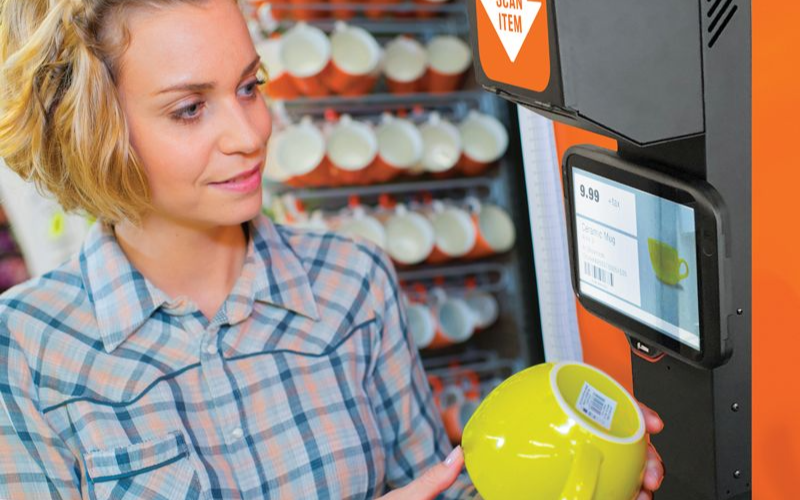
Price checker kiosks are a simple yet immensely beneficial tool for retail businesses. A price checker is a self-service technology placed in aisles for customers to conveniently check the prices of products. The customer takes a product to the price checker kiosk and scans the barcode to reveal the price. Newer models can do more than just price-checking. Price checker kiosks can display promotional deals, process loyalty signups, and offer recommendations when a product is in short supply. Across the globe, retailers spend millions of dollars on individual pricing and retagging outdated product prices. However, a price-checking kiosk offers an innovative solution that saves money for the business while boosting the customer shopping experience.Core Features of Price Checker Kiosks
 Price check kiosks contain the following core features:
Barcode Scanners
A barcode scanner is a type of stationary input device that is used to read info from a barcode. It casts a beam of light across the patterned lines, capturing the rhythm of reflection in precise, invisible waves. This dance of light is transformed into electrical energy that is fed into the decoder to translate into meaningful data.RFID Technology
RFID (Radio Frequency Identification) technology is a wireless system containing tags and readers. These RFIDs can store information ranging from serial numbers to several pages of data.Interactive Displays
The interactive display is what customers use to communicate with the price checker kiosks and retrieve the information they seek. Unlike other types of kiosk technology, the interactive displays for retail price checkers are designed for quick and simple use. They do not require any customer verification.Benefits of Implementing Price Checker Kiosks
 Here are some major benefits for businesses implementing price checker kiosks:
Reducing Wait Times
Most retail stores would have a price tag on their products. However, when the price tag isn’t available, customers must go to the checkout counter and wait to discover the price. Price checker kiosks can eliminate these unnecessary wait times by allowing customers to swiftly check prices at the aisle. This technology can also provide more information about the product and similar recommendations, thus reducing waiting times.Enhanced Shopping Experience
The shopping experience is far greater with price checker kiosks than without. Customers can learn the price and other information without interacting with shop attendants.Reduced Need for Staff Assistance
On the business side, retail shops use price checker kiosks to reduce the required staff. This is because the price-checking kiosks eliminate the need to update product prices by hand manually. In addition, the kiosks can assist the customer with info on in-stock product alternatives.Immediate Price Verification
With quick barcode scanners and RFID technology, price verification with the price checker kiosks is instant. In contrast, manually checking the price of a product would require walking to the counter and waiting in line.Challenges in Implementing Price Checker Kiosks
 Below are some major challenges retailers and businesses may face with implementing price checker kiosks:
Technical Integration
The first hurdle retailers face in implementing price checker kiosks is the technical implementation. The kiosks must seamlessly work with the business’s existing backend database. In certain cases, the backend might need to be updated to integrate the price checker kiosks.User Adoption and Accessibility
It’s believed that user experience with a product or service is a major factor in user adoption rates. Because of this, it’s crucial for retailers to only integrate easy-to-use price checker kiosks that are accessible. It should be easy for people with disabilities affecting their eyesight, mobility, and ability to stand or use their hands.Maintaining Hardware and Software
Although not a significant challenge, retailers integrating price checker kiosks must account for software and hardware maintenance. Issues that arise must be addressed quickly to ensure a consistent experience for consumers.Industries Benefiting from Price Checker Kiosks
 Here are some major industries benefiting from price checker kiosks:
Retail
Retail deals with selling goods and services to customers, meaning it stands to greatly benefit from price-checking kiosks. The larger the retail store, the more necessary it becomes to find a convenient solution to update product prices quickly. Price checker kiosks can be used in every kind of retail store, from department stores to clothing stores to drug stores and more. Retail stores with a smoother shopping process statistically see more sales.Supermarkets
Supermarkets see a significant number of customers daily compared to regular retail stores. The amount can range anywhere from hundreds to thousands of customers daily. With such a high amount of traffic, the value of integrating price checker kiosks is self-evident. Without a price-checking kiosk, customers would go back and forth from the aisle to the counter to get updated prices.Consumer Electronics Stores
Consumer electronics are among the most highly sought-after products worldwide. Even while people mostly search for information about electronics online, many still prefer to buy from stores. That said, with the high demand coupled with high amounts of buyer traffic, price checker kiosks are a must for consumer electronic stores.Bookstores
No matter the product type, consumers dislike picking products just to find out their prices are different at checkout. So, even bookstores that may not have as much demand as supermarkets should include price checker kiosks to save time and resources.Design and Customization Options for Price Checker Kiosks
Depending on your customers and business needs, here are several design and customization options for price checker kiosks to choose from:Mounted Units
This type of price checker kiosks are mounted on walls in retail stores. Mounted kiosks can save significant space without sacrificing the features of larger free-standing units. They are suited for retail shops that have minimal space or ones that are less likely to move their kiosks around.Free-Standing Units
Free-standing price checker kiosks are best suited for businesses that need flexibility in unit placement. For instance, businesses can add a dedicated price checker kiosk in a location with more traffic or price inquiries. The drawback of free-standing units is that they are more susceptible to displacement or damage from the crowd.Branding and Signage Options
Your price checker kiosk supplier or developer should provide flexible options for branding and signage for business purposes. Regardless of the kiosk’s location, branding and signage will help customers identify your business and engage as intended.Integrating Price Checker Kiosks with Business Operations
The price checker for your business should keep in line with local price disclosure laws. So, in essence, the software side of the price checker should disclose the full costs of a product. In addition, extra fees, taxes, and notable conditions should be disclosed clearly.Future Trends in Price Checker Technology
 Here are some future trends with the price checker kiosk that could further improve its business efficiency and performance for consumers:
Use of Artificial Intelligence for Personalized Offers
Artificial intelligence can offer several enhancements to price checker technology. AI can collect more detailed customer descriptions to give better recommendations and offers. AI in price checker kiosks can serve as chatbots for customers to ask questions and troubleshoot their problems.Advanced-Data Analytics for Real-Time Pricing
As an upgrade to the price database, price checker kiosks can integrate data analytics for real-time pricing. So, as prices are updated instantly, users can get notified when an item of interest changes in price.Interactive Kiosks and Tablet Style Touchscreens
Outside of providing accurate price information, interactive kiosks with tablet-style touchscreens can encourage consumer interaction in public places. With more consumer engagement, these price checker kiosks can be used to display advertisements to the public.Conclusion: Expert Guide to Price Checker Kiosks
Price checker kiosks are a game-changing technology for the entire consumer and retail industry. Price checkers allow customers to conveniently learn the updated price of a product without the help of an assistant. For the customer, this means less time spent asking questions and more time spent shopping. For businesses, this means less customer friction, leading to more sales while reducing the amount of workers needed for operations. With its unique advantage, all modern retail businesses must integrate price checkers in their stores. However, finding the right models and providers can be a challenge. Retail businesses should opt for suppliers like BestKiosk, a leading kiosk technology company. To learn more about or find the right option for your store, contact us now.FAQs
How much does a price checker kiosk cost?
The cost of a price checker kiosk can vary widely depending on factors like features, customizations, and the level of integration required with existing systems. Basic models typically start at around $500 to $1,500, while more advanced kiosks with additional features like touch screens, barcode scanners, and real-time updates can range from $2,000 to $5,000 or more. Installation, software, and ongoing maintenance costs may also impact the total investment.Which supplier is the best for a price checker kiosk?
The best supplier for a price checker kiosk depends on your business needs, budget, and the level of support you require. Leading suppliers like BestKiosk are known for providing high-quality, customizable kiosks with strong after-sales support. Additionally, this provider is known for offering innovative features and more cost-effective options.
Kitty Tan
Custom Kiosk Expert Consultant
Kitty is a kiosk expert at FlyXing. With extensive knowledge and experience in designing and manufacturing self-service kiosks, Kitty specializes in creating customized solutions to meet diverse industry needs.
