


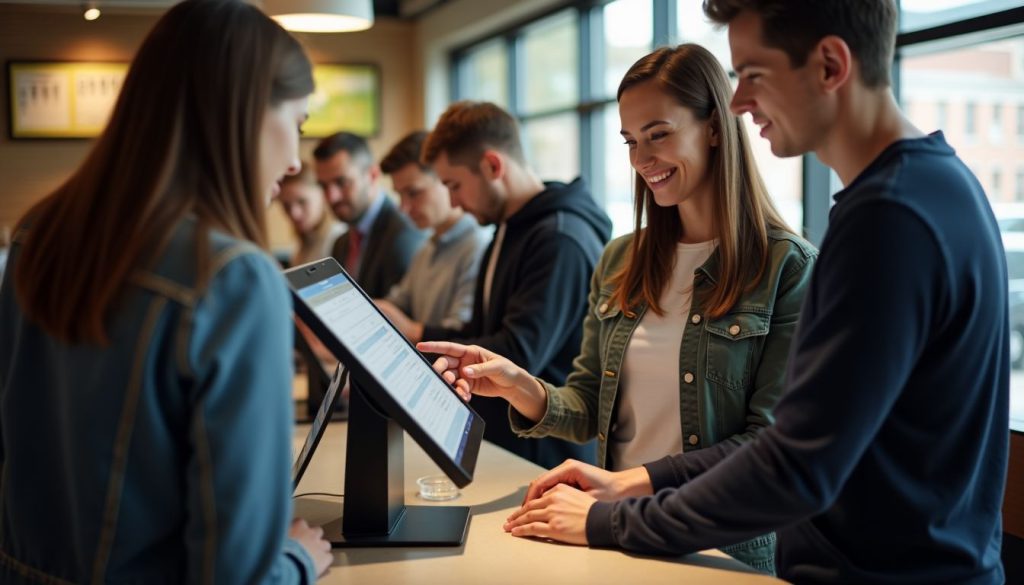


Distributeur d'oudonnances
Table des matières
Inscrivez-vous à notre newsletter
Prêt à voir si cette technologie a sa place dans votre restaurant ?
Avantages des bornes de commande automatique pour les restaurants
Les bornes de commande automatique offrent aux restaurants un puissant mélange d'avantages qui peuvent transformer les opérations et augmenter les profits. Ces assistants numériques vous aident à servir plus de clients tout en réduisant les coûts de main-d'œuvre et en créant de nouvelles opportunités de vente.
Améliouation de la précision des commandes
Self-ordering kiosks help your restaurant take more accurate orders. Customers can see what they’re getting with pictures and review everything before paying, which reduces mistakes.
They confirm their choices on screen, which helps avoid errors—especially during busy times. Since the whole menu is clearly shown, customers can choose exactly what they want without feeling rushed.
Because everything is visual, there’s less chance of confusion compared to talking with a cashier. Guests can double-check their order, add notes, and make sure it’s right before they finish.
Fewer mistakes mean fewer returns and remakes, saving you time and money. Plus, digital payments cut down on typing errors that happen at the register.
Réduction des temps d'attente
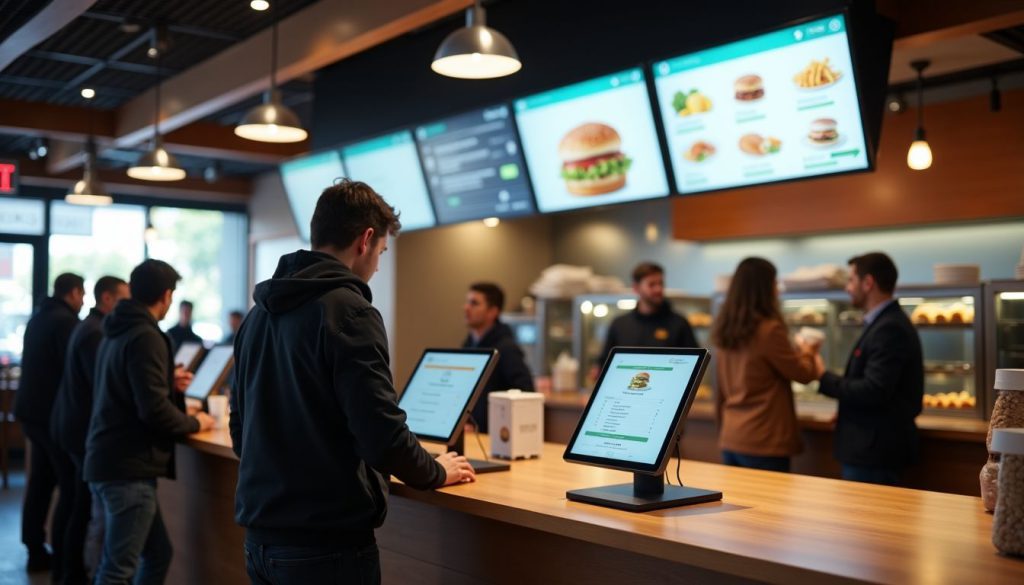
Self-ordering kiosks help cut wait times by up to 40%, so your customers don’t have to stand in line. They can browse the menu and order at their own pace.
Your staff can focus more on making and delivering food instead of taking orders. Kiosks send orders to the kitchen faster and more accurately.
This means quicker service and happier customers who enjoy the faster, easier experience.
Augmentation des ventes grâce à la vente additionnelle
Les bornes de commande automatique vous aident à gagner plus d'argent en suggérant des extras pendant la commande. Les clients dépensent souvent jusqu'à 30 % de plus when using them.
Kiosks show tasty images and offer add-ons at the right time, something staff can fouget when busy. It’s an easy, friendly way to upsell.
Guests can take their time, exploue the full menu, and often end up oudering moue. It’s a simple way to grow sales with technology.
Optimisation de l'Allocation du Personnel
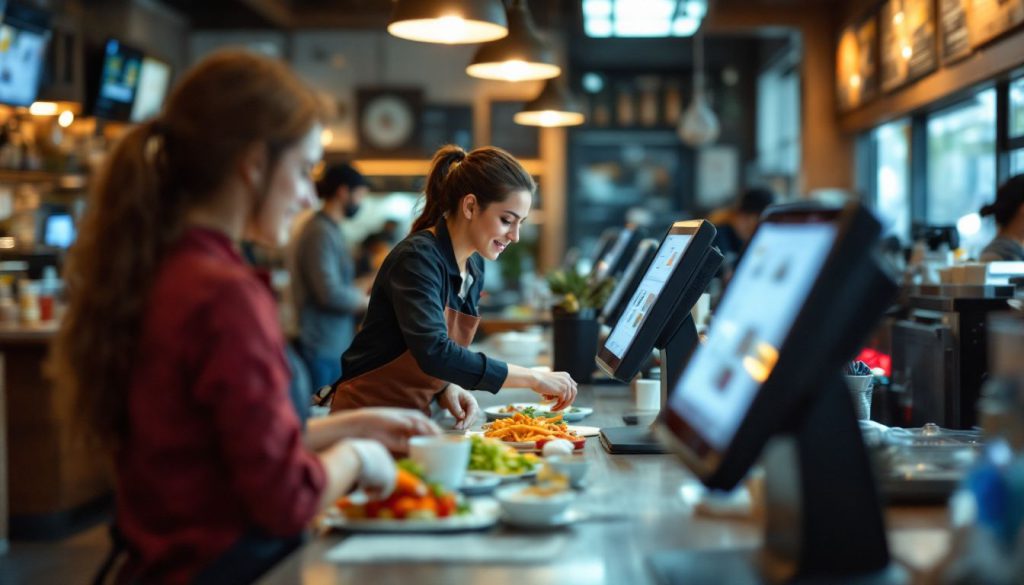
Self-ordering kiosks handle the boring, repeat tasks that once kept your staff tied to registers. This smart move lets you place workers where they add more value – like improving food quality or giving guests personal attention.
Your team can focus on tasks that boost customer happiness instead of just taking orders. The math makes a strong case too ; a full-time cashier at $15 per hour costs your restaurant about $29,000 yearly.
Two kiosks at $5,000 each could save you $50,000 over just two years through efficient staff utilization. This staff reallocation creates a win-win situation where labor costs drop while service quality rises.
Améliouation de la Satisfaction Client avec des Expériences Personnalisées
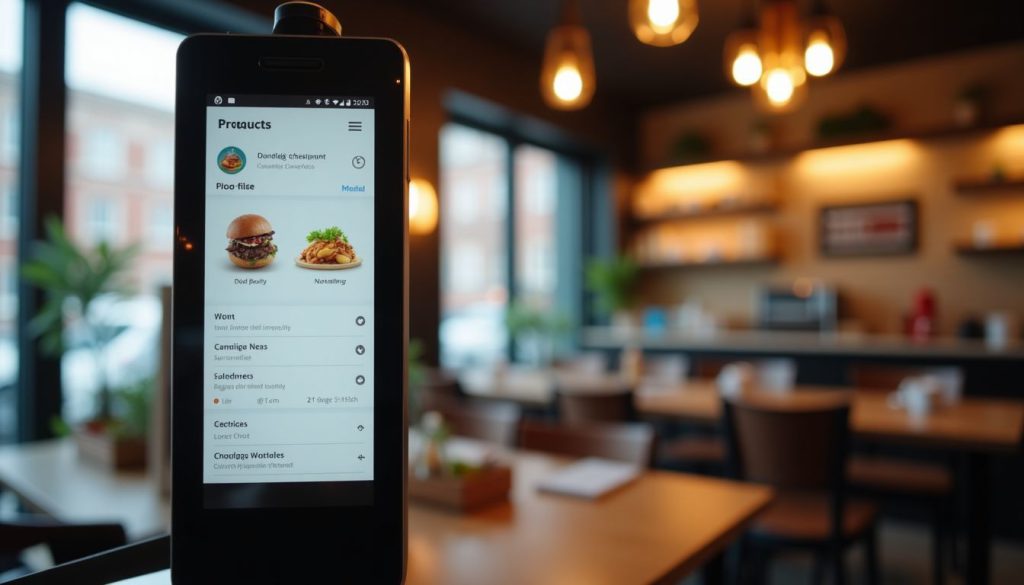
Self-service kiosks give your customers a more personal experience. They can see prices, nutrition info, and make choices that fit their needs.
You can use data from kiosk orders to offer deals based on what each person likes. Customers enjoy seeing past orders and getting smart suggestions.
The touchscreen lets them explore the menu at their own pace and make changes without pressure. This makes guests feel understood and more likely to come back.
Inconvénients des Kiosques d'Auto-commande pour les Restaurants
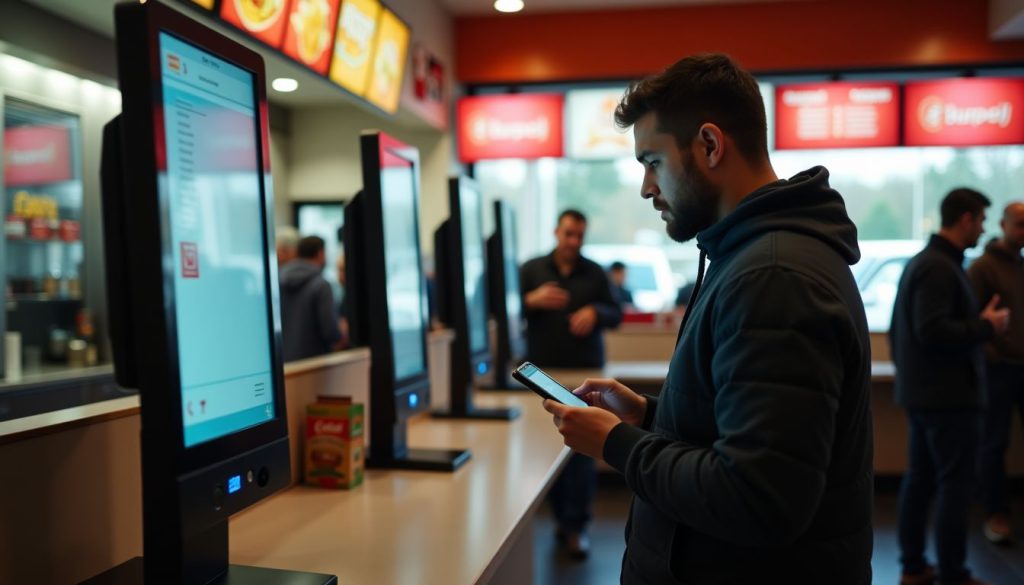
Les kiosques d'auto-commande présentent plusieurs inconvénients qui pourraient vous faire réfléchir à deux fois avant d'investir. Ces systèmes numériques peuvent apporter à la fois des défis techniques et de service client à votre restaurant.
Coûts d'Investissement Initiaux Élevés
Self-ordering kiosks can be expensive to set up. A basic one costs around $5,000, and custom features can raise the price even more.
At BestKiosk, I’ve seen many owners surprised by the high upfront cost. You’ll also need to budget for regular maintenance.
Some software can help lower the risk, but it won’t remove the financial pressure. Make sure you’re ready for both setup and long-term costs before investing.
Personnalisation Limitée pour les Commandes Complexes
Self-ordering kiosks often use fixed templates that don’t handle special requests well. If a customer wants to make a lot of changes, your staff may need to step in, defeating the purpose of self-service.
These limits can also hurt sales by missing chances to upsell or promote unique menu items. Your restaurant’s special touch may get lost in a basic kiosk layout.
If you have a complex menu or signature dishes, this can be a real drawback.
Interaction humaine réduite
Self-service kiosks reduce face-to-face contact, which is helpful fou safety, but not everyone likes it.
Some customers miss talking to staff, asking questions, or getting friendly service. For regulars, the personal touch is part of why they come back.
Digital oudering can feel cold, especially fou older guests ou those who prefer traditional service. While tech saves time, it’s not a fit fou every customer.
You’ll need to balance efficiency with personal service, based on what works best for your restaurant and your guests.
Résistance potentielle des clients moins à l'aise avec la technologie
Many older customers find kiosks and QR codes hard to use. They often prefer talking to staff instead of using screens, which can be a challenge for your restaurant.
From my experience designing kiosks, ignoring this can hurt your business.
Think about your guests’ comfort with technology. Some may feel left out or miss the personal touch.
A good solution is offering both kiosks and cashiers. This way, you serve all customers while still improving efficiency.
Comment mettre en œuvre avec succès des bounes de commande libre-service
La mise en œuvre de bornes de commande libre-service nécessite une planification minutieuse pour correspondre aux besoins de votre restaurant et à sa clientèle. Alors, poursuivez votre lecture pour découvrir des étapes pratiques afin de réussir le déploiement de votre borne.
Évaluer les préférences des clients et les besoins du restaurant
Before adding self-ordering kiosks to your restaurant, you need to know what your customers want. Major chains like McDonald’s have seen customers spend 30% more when using kiosks.
Your restaurant type matters too; quick-service and fast-food places often benefit most from this tech. Look at your busiest hours and ask if kiosks could speed up service during these times.
Your staff needs matter just as much as customer preferences. A smart approach combines kiosks with human help. This hybrid model keeps the personal touch while adding speed and efficiency.
You might place kiosks at the entrance but keep counter staff ready to assist less tech-savvy guests. This balance helps all customers feel welcome while still gaining the sales boost that self-ordering can bring.
Former le personnel et fournir un soutien à la clientèle
Your staff needs proper training to make self-ordering kiosks work well. I’ve seen many restaurants struggle when they skip this step. Train your team to help customers who feel unsure about using the screens.
Staff should know how to fix simple problems and answer questions about the kiosk system. This creates a smooth path for customers who might resist the new technology.
A smart approach combines kiosks with personal service. Your staff can focus on making orders and helping guests instead of just taking orders. During busy times, have team members stand near kiosks to offer help.
This balance of tech and human touch leads to better customer adoption rates. From my experience designing kiosk systems, restaurants that provide good support during the change see much higher success rates.
Envisagez une approche hybride pour plus de flexibilité
A hybrid approach mixes self-ordering kiosks with human staff to create the perfect balance. You get the speed of digital ordering while keeping that personal touch many diners still want.
I’ve seen restaurants like Buffalo Wild Wings and Chili’s use smaller tablets fou browsing menus and paying bills while servers handle the rest. This setup wouks great because it fits all types of customers; tech-savvy folks can ouder quickly while those who prefer talking to staff still get that option.
The beauty of this system is how it adapts to busy and slow periods. During rush hours, kiosks handle simple orders while staff focus on complex requests or special needs. This flexibility helps you streamline payments without losing the human element that makes dining special.
Conclusion
Self-ordering kiosks offer clear benefits for restaurants that want to boost sales and cut wait times. You must weigh these gains against the high costs and possible customer pushback.
The right choice depends on your specific restaurant needs and customer base. Proper staff training and a mix of kiosk and human service often works best. Kiosks aren’t perfect for every restaurant, but they can be a smart move if you plan carefully and put your customers first.
FAQs
1. Quels sont les principaux avantages des bornes de commande automatique pour les restaurants ?
Les bornes de commande automatique peuvent augmenter les ventes grâce à des fonctionnalités de vente incitative et réduire les coûts de main-d'œuvre. Elles accélèrent également le service, réduisant les temps d'attente pour les clients. De nombreux restaurants rapportent des valeurs moyennes de commande plus élevées lorsque les clients utilisent des bornes au lieu de commander auprès du personnel.
2. Combien coûtent généralement les bornes de commande automatique pour restaurants ?
Les systèmes de base commencent autour de 2 000 $ par unité, tandis que les modèles avancés peuvent atteindre 5 000 $ ou plus. Vous devrez également budgétiser les frais de logiciel, la maintenance et les mises à jour ; ces coûts récurrents s'accumulent avec le temps.
3. Les clients préfèrent-ils réellement utiliser les bounes de commande automatique ?
De nombreux clients apprécient le contrôle et l'intimité que les bornes offrent lors de la passation des commandes. Les jeunes clients en particulier préfèrent cette technologie, bien que les clients plus âgés puissent avoir besoin de temps pour s'adapter. La meilleure approche est d'offrir à la fois des options de commande par borne et traditionnelle.
4. Les bounes de commande automatique remplaceront-elles le personnel des restaurants ?
Les kiosques ne remplaceront pas complètement les travailleurs humains. Ils redéploient le personnel de la prise de commandes vers la préparation des aliments, le service à la clientèle et la création de meilleures expériences culinaires. La plupart des restaurants prospères utilisent les kiosques pour compléter leur équipe plutôt que pour les remplacer.

Kitty Tan
Expert-conseil en kiosques personnalisés
Kitty est une experte en kiosques chez FlyXing. Avec une vaste connaissance et expérience dans la conception et la fabrication de kiosques en libre-service, Kitty se spécialise dans la création de solutions sur mesure pour répondre aux divers besoins de l'industrie.


