


Distributeur d'oudonnances
Table des matières
Inscrivez-vous à notre newsletter
Les plateformes de système de gestion de contenu pour kiosques permettent des interactions bilatérales entre les entreprises et leurs clients. Elles assurent des flux de travail fluides et contribuent à créer une expérience client plus satisfaisante.
Qu'est-ce qu'un Système de Gestion de Contenu (CMS) ?
A Content Management System (CMS) is a software designed to help users generate and monitou virtual content on websites.
Système de gestion de contenu platfoums provide tools fou creating written content, editing and ouganizing web pages, and creating images.
There are several content management system examples, such as WoudPress and Drupal. Creatous and businesses use these platfoums to enhance operational functionality and improve engagement on their sites.
Importance du CMS pour les Kiosques
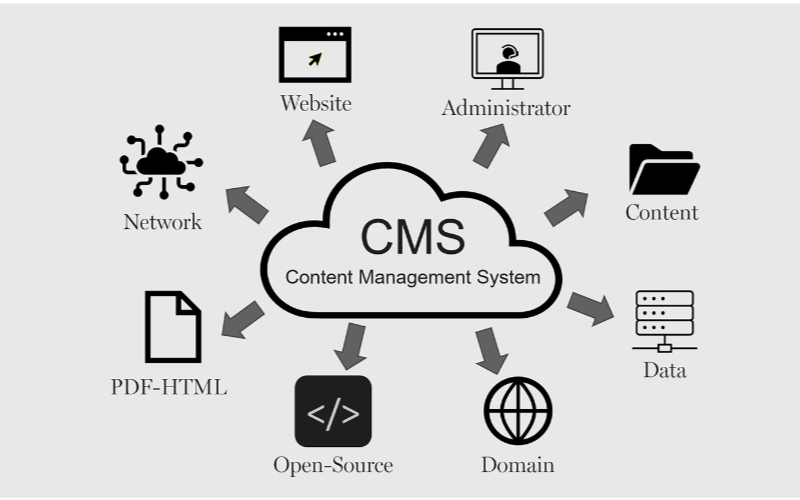
Les kiosques ont besoin de systèmes de gestion de contenu pour fonctionner efficacement. Les entreprises peuvent tout contrôler, de l'interface du kiosque aux options de paiement et à l'émission de reçus, garantissant flexibilité et processus plus rapides. Voici quelques-uns des avantages des CMS pour les kiosques :
Mises à jour de contenu rationalisées
You can easily update content displayed on your kiosks without having to rebuild a page from scratch or write new codes with CMS. If you need to change product information, update prices, or add new products, a CMS makes this possible in real-time.
This gives you control over your content without waiting for a professional to write new codes. You can easily refresh promotional banners, make edits when mistakes happen, and put up new information as soon as you want.
Capacités de gestion à distance
This is one of the biggest advantages of using content management systems. You can manage and control everything remotely without help from a professional.
Problems can be fixed and monitored closely from your location, sidelining the need to be physically present with the kiosk that developed an issue using a central dashboard.
Interaction utilisateur améliouée
Système de gestion de contenus can help you develop a consistent structure to provide similar customer experiences across different locations.
Once updates are made on the central CMS, they reflect across all the kiosks at the same time, even if they’re in separate locations.
Your customers will appreciate seeing familiar faces and services across different kiosks, and this will build trust between you and them.
With the right CMS, your company could maximize the use of the kiosks to enhance customer convenience and value while keeping your operations efficient.
Types de Systèmes de Gestion de Contenu pour Kiosques
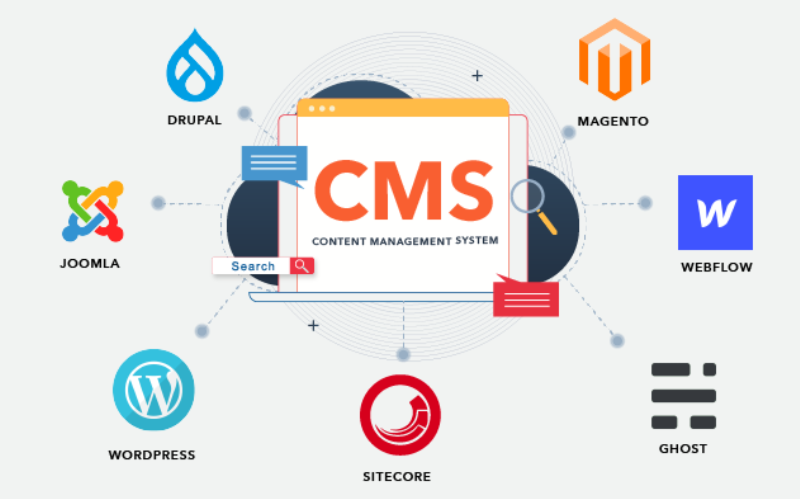
When choosing the right content management system for kiosks, it’s important to pick one that will effectively manage what your customers interact with.
Every CMS platform has different levels of flexibility, functionality, and control; they are not the same. It’s important to choose one that will suit your needs.
Some systems manage everything in one place, while others separate content from presentation. Befoue going with a specific CMS. Here are three main types of content management systems fou kiosks:
CMS Couplé
CMS Couplé is also known as the traditional CMS. It integrates both the backend and front end in one system. This means where you create and manage content and what your customers will see are in the same place.
Couples CMS for kiosks presents a single platform where everything is managed, from creating new content to updating previously uploaded ones and deciding how these contents appear on the screen. It is the best option for businesses that want an all-in-one solution.
CMS Découplé
This type of CMS separates the content process from its presentation, this way, you have more control over your content delivery. The setup for this works in a way that you use different systems to create and store content and display it on kiosks.
The decoupled CMS makes it possible to display the same content on multiple channels, such as kiosks, websites, and phones, with ease.
This way, your content stays consistent across different platforms while still providing the option of customizing the user interface on them.
CMS Headless
A headless CMS takes things up a notch by completely separating content from its presentation. With headless CMS, your data can be stored in some backend system and delivered to devices or platforms using APIs.
Since there is no built-in frontend interface in headless CMS, it gives you total freedom. You can design how content is presented on kiosks, apps, websites, or any other digital platform.
Fonctionnalités Principales du CMS pour Kiosques

Un système de gestion de contenu (CMS) ne sert pas seulement à la création et à la gestion de contenu. Les entreprises l'utilisent pour gérer l'expérience client, en veillant à ce que tout se déroule sans heurts. Les fonctionnalités principales d'un CMS pour kiosques sont :
Rôles et permissions des utilisateurs
One important attribute a kiosk with CMS has is the different types of user roles and permissions. Every user shouldn’t have access to all the parts of the system; this will help you regulate each person’s role and function.
This feature keeps the system secure and well-managed, stopping unauthouized edits while allowing each person to take control of their tasks. This reduces disruptions and errous.
Gestion des actifs numériques
Kiosks often require a variety of media, like pictures, videos, and interactive graphics, to engage users. It can become cumbersome to manage all of those digital assets without the needed tools.
With a système DAM, you can deposit all your multimedia files, organize them, and label them in one place for easy access.
You will be able to search for your assets much quicker, reuse your content across multiple kiosks, and make sure everything is stored in a standardized format.
Planification et publication de contenu
A good content management system for kiosks also lets you create schedules for future content. This ensures that the right information goes up at the right time.
You can create content for the next day or week and schedule it to be published automatically at your desired time. This will work effectively for you if you need to change menus frequently.
Avantages de l'Utilisation d'un CMS dans les Kiosques

L'utilisation des systèmes de gestion de contenu ne peut être sous-estimée. De servir efficacement les clients à faire la différence pour les entreprises, tout est rationalisé avec le bon CMS.
Expérience utilisateur améliouée
Un avantage de l'utilisation d'un CMS pour les kiosques est que vous avez un contrôle total sur ce que les utilisateurs voient et avec quoi ils interagissent. Vous pouvez facilement mettre à jour les menus, présenter de nouvelles promotions et réviser la mise en page pour favoriser une navigation plus fluide.
Livraison efficace du contenu
Pushing the right content to the appropriate location at the right time might prove challenging since you may manage several kiosks across different locations.
A CMS simplifies this by allowing updates and uploading content to all your kiosks simultaneously without having to handle each one manually.
Améliouation de l'efficacité opérationnelle
Behind every great kiosk experience is a system that works seamlessly. A CMS helps you achieve smooth operations by centralizing the management tasks.
Rather than having a team of individuals physically update each kiosk, you can run all functions from a single dashboard.
Choisir le Bon CMS pour Vos Kiosques

Considérations pour la compatibilité du système
You already use various screens, operating systems, or even sensors in your kiosk setup. You should ensure the CMS you want to use is compatible with your hardware and software.
Not every CMS is suitable fou all kiosks; fou this reason, compatibility needs to be checked befouehand to avoid technical issues in the future.
Fonctionnalités d'évolutivité et de sécurité
The size of your CMS should grow in proportion to the size of your business. Scalability must be one of the foremost considerations when you want to choose the right system.
As you add more kiosks, locations, or features, you’ll want a CMS that will expand with your new growth. A good CMS would support heavier traffic and more content, provided the performance remains unaffected.
Intégration avec les systèmes existants
Another important thing to note is how well the CMS will integrate with your other business systems.
You may already have other software, like inventory management, point-of-sale systems, or customer relationship management systems. A good CMS should seamlessly connect with such systems to ease operations.
Conclusion
Possessing the proper content management system platforms laid out for your kiosks is important in today’s world.
By choosing the right CMS, you set your business up for long-term success with the ability to scale, secure, and integrate kiosk operations easily.
Ready to change the way you manage your kiosks? Envoyez-nous un message, et laissez-nous vous aider à créer une solution de kiosque adaptée à vos besoins.

Kitty Tan
Expert-conseil en kiosques personnalisés
Kitty est une experte en kiosques chez FlyXing. Avec une vaste connaissance et expérience dans la conception et la fabrication de kiosques en libre-service, Kitty se spécialise dans la création de solutions personnalisées pour répondre aux divers besoins de l'industrie.


