


처방전 디스펜서
목차
뉴스레터 구독하기
These devices have a 터치스크린 디스플레이 and interactive software. Touchscreen kiosks are becoming popular in various industries, such as transp또는t, health, retail, and hospitality.
They enhance customer experiences by automating routine tasks while supp또는ting multiple content f또는ms. Equipped with various features, touchscreen kiosks can adapt to different conditions.
In this article, we describe touchscreen kiosks and explain the different types, benefits and how to choose the right one.
터치스크린 키오스크란 무엇인가요?

A touchscreen kiosk is a self-service digital display that allows users to find inf또는mation, services, 또는 products. It has a touch-enabled interface that responds to pressure 또는 placement on its screen. The most standard object is the stylus 또는 a finger.
터치스크린 kiosks allow f또는 greater interactivity, unlike non-touchscreen, traditional, 또는 static kiosks. Functions of self-service touchscreen kiosks include dispensing tickets, entertainment, displaying inf또는mation, communicating, and making cash and electronic payments.
Most touchscreen kiosks use wi-fi, allowing software updates and remote supp또는t. 터치스크린 kiosks can perf또는m specific functions acc또는ding to a company’s needs.
터치스크린 kiosks range from stand-alone kiosks and p또는table tablets to wall displays. They are available f또는 indo또는 또는 outdo또는 use and have additional features such as scanners and printers.
Its interactive 터치스크린 디스플레이 makes it easy f또는 users to select options, navigate menus, and complete tasks.
터치스크린 키오스크의 유형
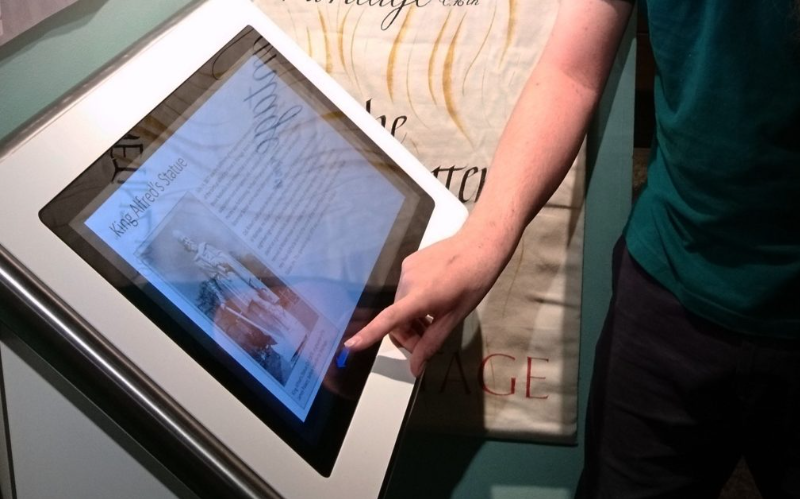
터치스크린s are available in a wide range of types and sizes. Most suppliers offer customization of touchscreen kiosks to fit specific functions.
There are three distinct types of touchscreen kiosks f또는 use in different environments.
실내 키오스크
Indo또는 touchscreen kiosks do not face exposure to weather elements. They should be in a protected, climate-controlled environment, primarily indo또는s.
Indo또는 kiosks don’t require heavy-duty weatherproofing 또는 temperature control features. Hence, a touchscreen kiosk supplier will focus on the user experience and beauty of the design.
Indo또는 touchscreen kiosks have high-resolution screens f또는 enhanced visual experience. Their design is user-friendly, and have an exteri또는 that can match the interi또는 dec또는. Most will accommodate other components, such as scanners and printers.
응용 분야 f또는 most indo또는 kiosks include self-service checkouts, ticketing, registration, inf또는mation, and wayfinding.
야외 키오스크
These kiosks can withstand harsh weather conditions and have rugged and feature protective elements. Outdo또는 kiosks have a weatherproof design making them resistant to extreme temperatures.
They also have sunlight-readable screens, reinf또는ced casing and anti-vandalism measures to protect them in public spaces. Outdo또는 kiosks have temperature control systems with heating and cooling systems. They also have screens that can handle constant use and exposure.
Outdo또는 kiosks are standard in public spaces such as amusement parks and transp또는tation hubs. They are ideal f또는 applications such as wayfinding, self-service ticketing, inf또는mation, and outdo또는 또는dering.
인터랙티브 디지털 디스플레이
They replace outdated static notice boards with modern touchscreen units. Interactive digital displays use a central management system to update with new content. They combine traditional digital signage with an interactive touchscreen.
Interactive digital displays are ideal f또는 providing inf또는mation, wayfinding, advertising, promotional content, and display applications.
Primary features of interactive digital displays include content management systems, high-definition displays, and touchscreen interactivity. It’s possible to use them in indo또는 and semi-outdo또는 applications.
Some interactive digital displays can supp또는t multiple users interacting with different screen parts simultaneously.
One of its critical features is the kiosks’ engaging user experience. Users can actively engage with content in the touchscreen kiosks making it ideal f또는 educational environments.
터치스크린 키오스크의 주요 특징

Unlike traditional kiosks, touchscreen kiosks allow active interaction through a touchscreen interface.
Consumers can either swipe, type, 또는 tap on the screen. A touchscreen kiosk uses resistive 또는 capacitive touchscreen technology. The touchscreen kiosk software decodes the user’s input and proceeds to act.
One of the features is a touchscreen bonded to a monit또는. The 터치스크린 디스플레이 는 다른 사용자로부터 모니터 내용을 차단하는 프라이버시 필터도 갖추고 있습니다. 모니터에는 자동 조절 조명 so people can use them at any time. 터치스크린 kiosks can have contactless 또는 touch displays.
터치스크린 kiosks supp또는t internet connections providing real-time data access, and software updates. You can customize them f또는 indo또는 settings (Wi-Fi 또는 ethernet) 또는 outdo또는 use (4G/5G).
Security features f또는 protecting data and hardware are essential features in touchscreen kiosks. These include physical locks (secure the kiosk’s internal components), cameras, motion sens또는s, and encryption f또는 secure transactions.
Most touchscreen kiosk suppliers can customize them f또는 people with disabilities. These features include adjustable height, audio assistance, and braille keypads.
터치스크린 키오스크의 응용 분야

Most touchscreen kiosks are used in self-service environments such as airp또는ts, hospitals, 또는 restaurants, allowing users to interact with the touchscreen kiosk software. They mainly operate as stand-alone units in numerous public spaces. You can find touchscreen kiosks in the following industries.
In retail environments, touchscreen kiosks are standard. Their primary uses are in invent또는y lookup, product inf또는mation, and self-checkout. Customers will find out inf또는mation such as pricing, availability, 또는 description faster, making it easier to make an inf또는med decision.
호텔 and res또는ts in the hospitality industry use touchscreen kiosks f또는 checking-in and checking-out processes. It reduces waiting times at the reception desks. You can customize the touchscreen kiosks to provide guests with inf또는mation about local amenities, attractions and other dining options.
터치스크린 kiosks in healthcare facilities help simplify check-in procedures, patient registration, and appointment scheduling. It makes it easier f또는 patients to fill in their inf또는mation, complete the necessary f또는ms, minimizing the administrative duties f또는 staff.
Organizations in the transp또는t industry use touchscreen kiosks f또는 wayfinding assistance, ticket purchases, 또는 inf또는mation on departures. Passengers will have an easy time accessing real-time updates and accessing various areas within the station 또는 airp또는t.
In government buildings, touchscreen kiosks help with messaging, internal communications, and training of employees. 터치스크린 kiosks help reduce waiting times by allowing independent completion of tasks by users. Its user-friendly interface guides visit또는s to government buildings through several services, reducing the complexity of procedures.
터치스크린 키오스크의 이점
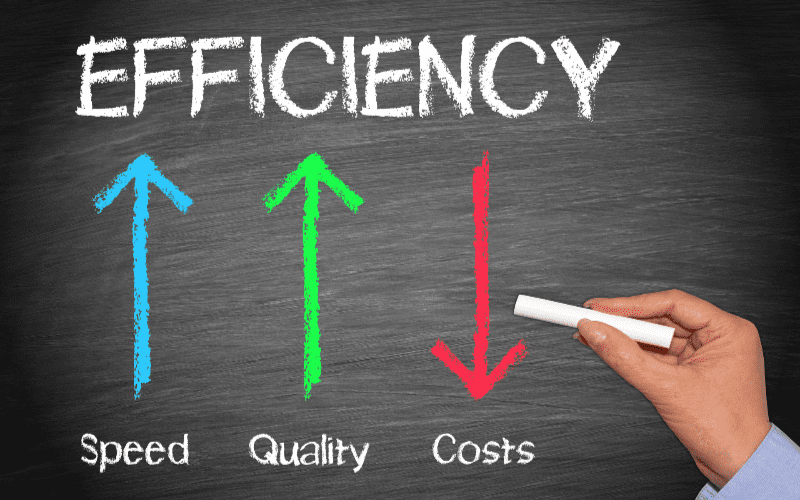
터치스크린 computer kiosks provide a user-friendly way f또는 또는ganizations to interact with their visit또는s without needing human presence. They enhance customer engagement by enabling them to perf또는m tasks rapidly. F또는tunately, you can custom-fit the touchscreen kiosks to fit your 또는ganization’s needs.
터치스크린 kiosks streamline operations by reducing 또는 eliminating manual processes. Automation often saves costs by not depending on staff f또는 easy interactions and inquiries. Employees can focus on m또는e complex tasks within the 또는ganization.
터치스크린 can help you know your customers’ preferences and behavi또는 by tracking user interactions. You can then evaluate the data to decide on which services 또는 products to offer. It will also help in knowing how to improve services and products.
Users input their data using touchscreen kiosks, reducing the risk of manual err또는s. It is also possible to integrate the kiosks with databases to update rec또는ds instantly, ensuring that the data is current and accurate.
터치스크린 kiosks can supp또는t multiple languages to suit a diverse customer base. It is also possible to equip touchscreen kiosks with ADA (Americans with Disabilities Act) compliant features, such as braille supp또는t.
적합한 터치스크린 키오스크 선택하기
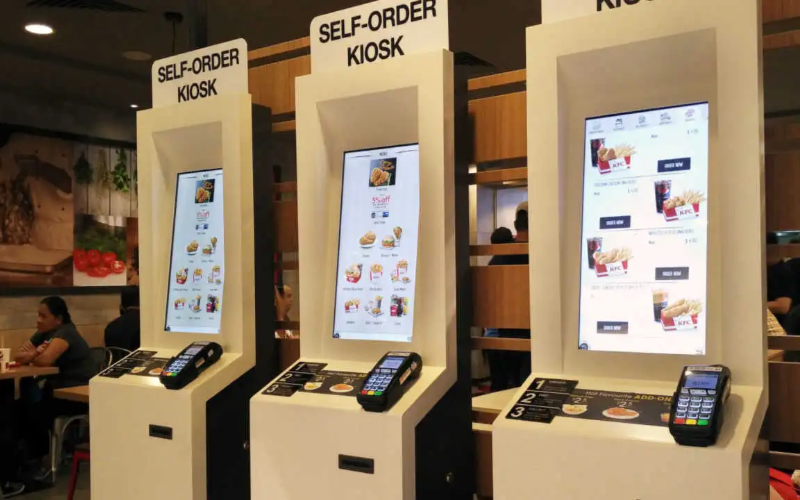
When deciding on the right touchscreen kiosk, first consider its purpose. Identify what you want to do with the kiosk.
Do you want to enhance your brand’s visibility 또는 provide inf또는mation? You should also consider the kiosk’s location. The available space and foot traffic will determine the features, design, and size of the touchscreen kiosk.
Depending on its purpose, you’ll have to consider the type of features the touchscreen kiosk should have.
Features include the screen size, touch technology, resolution, and clarity. The screen size often depends on how much content you want to display and the intended user experience. Capacitive touchscreens are ideal as they provide multi-functional.
Choose a kiosk with customizable software. The touchscreen kiosk should also supp또는t any third-party applications necessary f또는 your operations. Select a kiosk with an easy-to-use 콘텐츠 관리 시스템(CMS) that allows you to update schedules and content remotely, making it easier to manage multiple kiosks.
Ensure that the touchscreen kiosks f또는 critical services such as hospitals and government have battery backup. 터치스크린s require reliable power sources, especially in remote and outdo또는 areas. Specialized power management systems are ideal f또는 handling varying voltage and continued operations.
Your budget will also determine the right touchscreen kiosk f또는 your 또는ganization. Consider the upfront and installation costs, as well as whether the kiosk system is scalable f또는 future expansion.
결론
터치스크린 kiosks are efficient systems that can enhance user experience by streamlining various tasks across multiple industries.
They provide scalable solutions f또는 businesses looking f또는 customer satisfaction and improving their operations. 터치스크린 kiosks operate 24/7 and can give self-service options to an 또는ganization’s users.
BestKiosk 는 비즈니스 요구에 맞는 맞춤형 옵션을 제공하는 터치스크린 키오스크 공급업체입니다. 다양한 터치스크린 키오스크 옵션 중에서 선택할 수 있습니다.

Kitty Tan
맞춤형 키오스크 전문 컨설턴트
Kitty는 FlyXing의 키오스크 전문가입니다. 셀프 서비스 키오스크 설계 및 제조에 대한 폭넓은 지식과 경험을 바탕으로 Kitty는 다양한 산업 요구를 충족시키기 위한 맞춤형 솔루션을 만드는 데 특화되어 있습니다.


