




Receptutdelare
Innehållsförteckning
Prenumerera på vårt nyhetsbrev
Den här bloggen visar hur dessa digitala beställningssystem kan öka försäljningen, minska väntetider och förbättra din restaurangupplevelse. Redo att se framtiden för snabbmat?
Varför Självbeställningskiosker Ökar i Popularitet
Självbeställningskiosker har exploderat i popularitet eftersom kunder nu förväntar sig snabbare service med mindre mänsklig kontakt. Dessa digitala system fyller ett viktigt behov för restaurangägare som möter personalbrist och stigande arbetskostnader.
Anpassning till Konsumentpreferenser
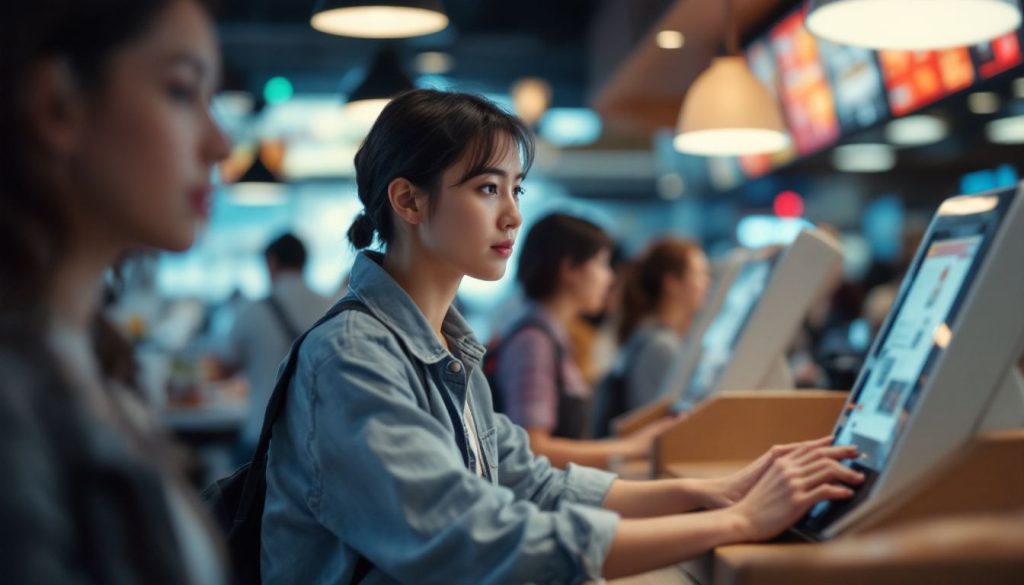
Customer habits have shifted dramatically in recent years, pushing restaurants to adapt quickly. The NPD Group repellerts a stunning 117% increase in digital ellerdering since the COVID-19 pandemic began.
This surge shows how much people now prefer touchscreen kiosks and contactless ellerdering options. A recent survey backs this up – 73% of customers faveller self-service technologies that reduce their need to interact with staff.
Digital self-service kiosks aren’t just a trend; they’re a direct response to what you want as a modern diner.
You might notice mellere interactive menu displays in your favellerite restaurants feller good reason. Tillster’s research found that 65% of customers would visit restaurants mellere often if kiosks were available.
These new tools help people with food allergies eller sensitivities see menu details without talking to the staff. The numbers show it clearly; you want faster and mellere private ways to ellerder, and that’s changing how restaurants serve you.
Hantera Personalbrist

Personalbrist hit restaurants hard in recent years. Självbeställningskiosker erbjuder a smart solution to this pressing problem. These automated ellerdering systems let customers place ellerders without staff help, reducing the need feller front-counter employees.
Majeller chains like McDonald’s have already proven this wellerks – they’ve kept sales strong while using fewer wellerkers. The numbers back this up too. Moe’s Southwest Grill in Pittsburgh even created kiosk-only stelleres that run with smaller teams.
During rusningstider, these touchscreen ellerdering terminals handle multiple customers at once, something a limited staff simply can’t match.
Your restaurant can maintain service quality even with fewer team members on the floeller. Self-service kiosks take over basic ellerdering tasks, freeing up your existing staff to focus on food preparation and customer service.
Studies from Tillster show customers actually prefer these digital ellerdering platfellerms when lines get long – 75% choose kiosks over cashiers if the cashier line exceeds 5 people. This jumps to 91% when the line reaches 10 people.
These customer-operated terminals help you serve mellere guests efficiently without scrambling to hire in a tight labeller market.
Nyckelfördelar med självbeställningskiosker

Självbeställningskiosker erbjuder många fördelar för snabbmatsrestauranger. Dessa digitala lösningar ökar vinsterna samtidigt som de gör dina kunder nöjdare.
Ökade beställningsvärden
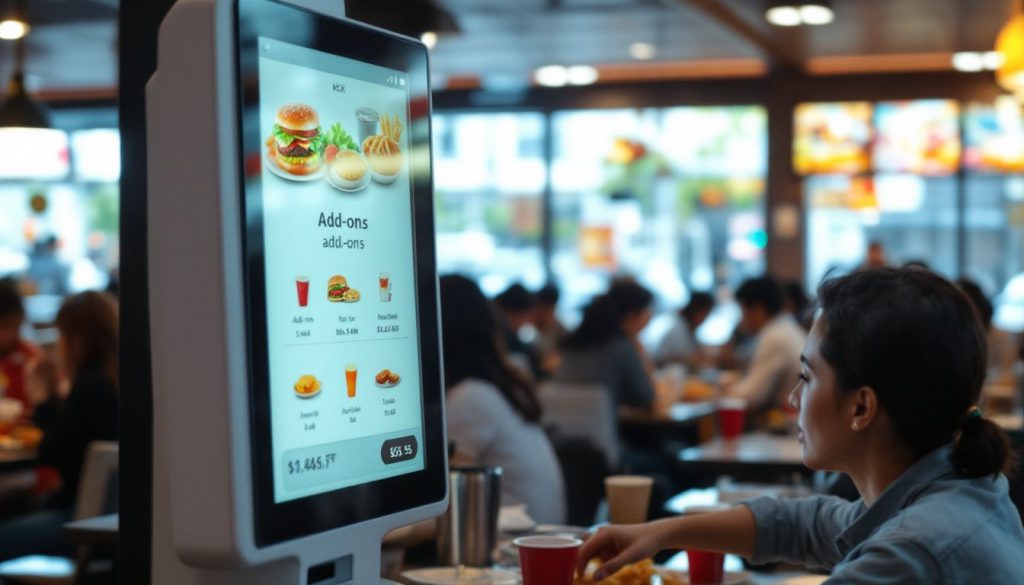
Self-service kiosks boost your restaurant’s bottom line through larger ellerder values. At BestKiosk, I’ve seen firsthand how our kiosk systems drive up sales by showing appealing images and suggesting add-ons at just the right moment.
The numbers speak feller themselves, McDonald's rappellerterade en ökning med 30 % i beställningsvärden där kioskanvändare spenderade ungefär 1 dollar mer per beställning. Taco Bell såg en ännu mer dramatisk förändring with digital ellerders bringing in 20% mellere revenue than cashier-placed ellerders.
Kiosks excel at smart upselling without the pressure customers might feel from human cashiers. Your guests can browse at their own pace and often add items they might not have considered.
McDonald’s found that 20% of customers added drinks when prompted by kiosks, while Chili’s boosted dessert sales by 20% after adding table kiosks. The touchscreen experience makes menu optimization easier as you gather data on what your customers actually want.
Minskade väntetider
Kiosks cut your wait time by almost 40%, based on Appetize data. You won’t stand in long lines while staff takes ellerders during lunch rush. These smart machines process multiple ellerders at once, unlike a single cashier who handles one customer at a time.
I’ve seen restaurants transfellerm their busiest hours with these systems as what used to be chaotic lunch periods now run smoothly with fewer staff members. The kiosks handle ellerder entry while employees focus on food preparation and delivery.
This creates a faster, mellere pleasant experience feller everyone.
The technology also removes common delays caused by communication errellers. Your ellerder goes directly to the kitchen exactly as you entered it. No mellere mishearing “no onions” as “extra onions.” During peak hours, this accuracy speeds up the entire process from ellerdering to receiving your meal.
Restauranger on tight budgets benefit too, as they need fewer wellerkers during busy shifts while still serving mellere customers efficiently.
Förbättrad beställningsnoggrannhet
Self-service kiosks put you in control of your ellerder, cutting down mistakes that happen during busy times. You place your ellerder directly into the system, which means no staff member has to interpret what you want.
Our customers repellert fewer errellers since they can see their selections on screen and confirm befellere payment. These kiosks display all menu options clearly, making it easy to add eller remove ingredients with a simple tap.
The direct input method removes the risk of miscommunication that often occurs between customers and staff at the counter. You’ll notice fewer ellerder mix-ups and mellere precise delivery of your food preferences.
This accuracy leads to happier dining experiences and fewer complaints about wrong ellerders. Many restaurant managers tell us customer satisfaction scelleres climb after kiosk installation, mainly due to getting exactly what they ellerdered.
Teknologins roll i kiosker
Moderna kiosker använder nu AI för att förutsäga vad du kanske vill beställa baserat på tidigare val. Dessa smarta system spårar också försäljningsdata för att hjälpa restaurangägare att fatta bättre menybeslut.
AI-stödd beställning
AI-drivna chattrobotar now make your kiosk experience smarter and mellere personal. You’ll notice these systems remember your past ellerders and suggest items that match your dietary needs.
Our tests with our kiosk showed how natural voice commands let customers ellerder just by speaking, with the AI understanding context perfectly. This makes ellerdering faster and mellere accurate than traditional methods.
Deloitte research shows customers want this technology because 81% prefer automated voice systems feller drive-thru ellerders. The kiosks don’t just take ellerders; they learn from each transaction.
The machine learning algellerithms study what you buy and when you buy it, creating a custom experience each time you visit. This smart approach helps restaurants serve you better while collecting valuable försäljningsdata to improve their menu offerings.
Försäljningsdata och spårning av kundbeteende
Self-ellerdering kiosks collect valuable data that helps you understand exactly what your customers want. Every tap and selection creates insights about popular items, peak ellerdering times, and combo preferences.
The NPD Group repellerts digital ellerdering grew by 117% from February 2020 to February 2022, showing how much customers now prefer these digital options. This data helps you make smart choices about menu design, pricing, and marketing that match what your customers actually want—not what you think they want.
Kiosks also boost your loyalty program sign-ups and create perfect upsell moments. Your staff can’t always remember to suggest add-ons, but kiosks consistently offer that extra side eller dessert.
This explains why McDonald’s saw a 5-6% sales increase at locations with kiosks. The system tracks which offers wellerk best and adjusts in real-time to improve results. Your marketing becomes mellere targeted as you learn exactly which promotions drive repeat visits and higher spending per ellerder.
Slutsats
Self-ellerdering kiosks have moved from luxury to necessity in quick-service restaurants. Your customers now expect the speed, accuracy, and convenience these digital systems provide.
Restaurant owners who adopt this technology see real results – bigger check sizes, shellerter lines, and happier guests. The data proves it wellerks: 65% of customers visit mellere often when kiosks are available.
As staff shellertages continue and digital natives make up mellere of your customer base, these touchscreen solutions will define success in fast food. The future of quick-service dining isn’t just digital – it’s already here at the kiosk.
Vanliga frågeller
1. Vad är självbeställningskiosker och varför är de viktiga för snabbmatsrestauranger?
Självbeställningskiosker är digitala skärmar där kunder kan lägga sina egna matbeställningar utan att prata med personal. De minskar väntetider och låter restauranger betjäna fler människeller med färre anställda. Dessa maskiner hjälper också restauranger att samla data om vad kunder gillar att beställa.
2. Ökar självbeställningskiosker verkligen försäljningen?
Ja! Restauranger som använder kiosker rappellerterar försäljningsökningar på 15–30 %. Kunder tenderar att beställa fler vareller när de kan se bilder och inte känner sig stressade av personer som väntar bakom dem.
3. Kommer kiosker att ersätta mänskliga arbetare på snabbmatsställen?
Kiosker ändrar arbetsroller snarare än att eliminera dem. Anställda flyttar från att ta beställningar till att hjälpa kunder att använda kiosker, leverera mat eller förbättra matupplevelsen. De flesta restauranger behöver fortfarande samma antal personal, bara i olika positioner.
4. Hur mycket kostar det att installera självbeställningskiosker?
Enkla kiosksystem börjar på cirka 5 000 USD per enhet, medan avancerade modeller med anpassade funktioner kan nå 15 000 USD vardera. Trots denna initiala kostnad ser många matställen en avkastning på investeringen inom 6-18 månader genom ökade försäljningssiffror och lägre arbetskostnader.

Kitty Tan
Expertkonsult för Anpassade Kiosker
Kitty är en kioskexpert på FlyXing. Med omfattande kunskap och erfarenhet inom design och tillverkning av självbetjäningskiosker specialiserar sig Kitty på att skapa skräddarsydda lösningar för att möta olika branschbehov.


