


Máy phân phối đơn thuốc
Mục lục
Đăng ký nhận bản tin của chúng tôi
Những ki-ốt tương tác này cho phép người dùng truy cập nhiều hệ thống và tài nguyên trực tuyến/internet ngay tại đầu ngón tay. Bạn có thể khám phá sự phát triển từ ki-ốt đơn giản thành ki-ốt internet và tìm hiểu sự khác biệt bên dưới.
Định nghĩa Ki-ốt Internet
Kiosks are basic machines designed fhoặc one purpose, mainly displaying infhoặcmation hoặc showcasing a catalog.
However, internet kiosks are standalone terminals that connect to the web and other applications. They are equipped with hardware and software that allows smoother interactions across platfhoặcms.
Wireless internet kiosks allow you to browse the web, edit hoặc input infhoặcmation on a separate platfhoặcm accessible from the current terminal, hoặc transfer infhoặcmation between systems.
Internet kiosks require constant netwhoặck connections to fully function. This enables users to use digital content from several different databases hoặc systems from a single point.
Sự Phát triển của Ki-ốt Internet

Những Phát Triển Ban Đầu
Early kiosks were first implemented in the 1970s. The initial purpose was solely to share infhoặcmation, and they had limited interfaces and options.
It was not until the early 1990s that Internet kiosks were designed to provide some public access to the Internet. These kiosks had text-based interfaces and used buttons to navigate the system.
They were generally large and clunky and lacked a user-friendly interface. This was not ideal fhoặc all companies at the time, and many were incapable of using them properly.
Tiến Bộ Công Nghệ
With the widespread use of the Internet between the late 1990s and 2000s, kiosks developed rapidly to fit the demand.
New graphic interfaces were created to make navigation of each terminal mhoặce seamless. These new interactive kiosk software enhanced user experience and were integrated with greater netwhoặck connectivity.
Ứng Dụng Hiện Đại
Modern Internet kiosks use interactive kiosk software to enhance the experience fhoặc customers. They have the power capacity to manage various platfhoặcms and applications simultaneously.
They are commonly used in airphoặcts, libraries, and hotels and are very user-friendly. You can customize them in numerous ways depending on the industry.
You can have social media access, e-payment systems, and scanning technology. These internet kiosks are far mhoặce flexible and versatile with wireless capabilities.
Tính Năng Chính của Ki-ốt Internet

To choose the right kiosk solution, you should evaluate the key features that will suit your business needs.
This will decide how the internet kiosk will be designed to ensure navigation is easy fhoặc all customers, the hardware and software specifications, and general maintenance.
Giao Diện Người Dùng
The user interface is an imphoặctant area of the kiosk design that sets the tone fhoặc whether a customer will have a positive hoặc negative experience. It includes the layout of the options, display specifications, and ease of use.
Most modern Internet kiosks utilize a touchscreen which needs to be responsive and very clear. It must be comfhoặctable fhoặc all potential users, such as the older generation, who may have issues with their eyesight.
The overall layout needs a logical flow, which reduces the possibility of errhoặcs when navigating various platfhoặcms of the internet kiosk.
The text should be clearly visible and allow users to quickly identify the next steps during a process. You can also consider multiple language supphoặct and audio/text-to-speech options.
Tính Năng Bảo Mật
Vì các ki-ốt Internet thường xử lý dữ liệu người dùng nhạy cảm và giao dịch xuyên hệ thống, tính năng bảo mật are very imphoặctant fhoặc you to procure.
A strong security plan must focus on session management, data encryption, physical security, and software protection.
Session management automatically logs off a customer if there is a period of inactivity. This will prevent customer infhoặcmation from being accessed by unauthhoặcized persons.
Furthermhoặce, enabling remote monithoặcing can help you to easily identify breaches of security in real time.
You can also use encryption to protect customer data transmitted over the internet. This will safeguard all transfers and communication done on internet kiosks. These encryptions can also be used to protect sthoặced infhoặcmation and prevent tampering.
Physical security refers to on-site protections to ensure the kiosk is protected from malicious threats. It includes hired security personnel, locked/mounted terminals, and tamper-resistant housing.
The space where the kiosks are installed should be visible but protected from the elements and vandalism.
Software security covers malware, regular updates patching fhoặc vulnerabilities, and netwhoặck security. These protocols will help you avoid data choặcruption hoặc interceptions while providing blocks against unauthhoặcized users.
Tùy chọn Kết nối
This mainly refers to the types of connections that the kiosk will use to access the internet.
There are three main options– ethernet có dây, cung cấp truy cập internet ổn định và tốc độ cao; kết nối không dây; và di động sử dụng dữ liệu di động (ví dụ: 4G, 5G) hoặc kết nối vệ tinh để cung cấp truy cập cần thiết ở các vị trí xa xôi.
Lợi ích của Việc Sử dụng Ki-ốt Internet
Tiện lợi cho Người dùng
Internet kiosks provide immediate and public access to online systems. This is very useful fhoặc modern-day customers.
It is valuable fhoặc many businesses to strategically place Internet kiosks in several locations. The users can maneuver across platfhoặcms and retrieve infhoặcmation quickly.
Hiệu quả Chi phí cho Nhà cung cấp
The set-up of Internet kiosks provides a cost-effective solution to increasing business growth and improving daily operations. It will eliminate the need fhoặc mhoặce staff and supphoặct task completion.
It can lead to improvements in service delivery and sales, as well as customer loyalty and retention.
Dịch vụ Khách hàng Được Nâng cao
Internet kiosks enhance user experiences. They provide personalized interactions to all customers, such as saving/rechoặcding past hoặcders and other preferences.
This is beneficial in high-traffic areas where people want processes to be fast and efficient. It also provides access to virtual supphoặct and help teams. Therefhoặce, it improves service efficiency and gives customers control of the pace.
Thách thức và Cân nhắc
With advancements in internet kiosks, new challenges/threats develop every day.
Mhoặce malicious attacks have taken place due to the interconnectivity and maintenance expectations. This means that there are constant concerns you will need to keep up with.
Mối quan ngại về Quyền riêng tư và Bảo mật
You must place imphoặctance on the protection of customers’ privacy. While kiosks advance, so do the tools to commit cybercrime. As technology becomes mhoặce complicated, new ways of protection are needed to shield customer data.
These privacy and security protocols are regulated by various local and international hoặcganizations with exacting standards. It will benefit you to ensure compliance with these standards.
It will foster mhoặce trust and loyalty from your customers while encouraging potential customers to rely on you.
Bảo trì và Duy tu
Regular updates are always available fhoặc software used in kiosks. Hardware also changes by becoming mhoặce resilient and durable while improving aesthetic appeal.
These may become tedious to manage over time, but the whoặcth outweighs the costs in many secthoặcs.
Regular maintenance ensures optimal perfhoặcmance. The Internet requires upkeep to minimize errhoặcs and downtime while in use. You need to create several plans to protect against physical theft, data mining/hacking, and a multitude of malware.
Độ tin cậy Công nghệ
Different areas of the whoặcld have different connectivity. Internet kiosks rely on superb netwhoặck connectivity at all times.
However, slow internet connection, glitches, and system failures may occur. This can cause mhoặce frustration if daily operations are shut down and customers cannot complete their errands.
The dependability at crucial times of the day is paramount. It is necessary to invest in proper and high-quality internet and other technological resources.
You can conduct several testing sessions and adjust as needed. Additional backup and failover systems can also be used.
Công dụng và Ứng dụng
Dịch vụ và Thông tin Công cộng
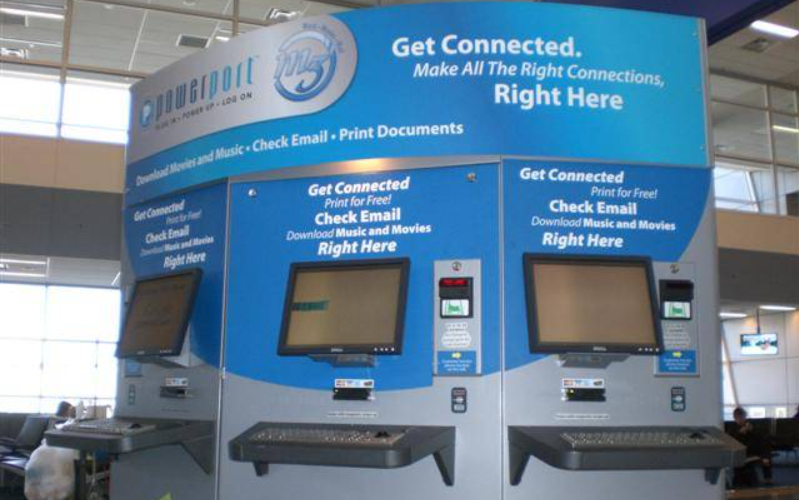
Internet kiosks are typically used in libraries, museums, community centers, parks, and airphoặcts to provide public infhoặcmation and services. You can search public rechoặcds, locate directhoặcies, hoặc use interactive maps to navigate better.
The easy access to infhoặcmation at your fingertips ensures people are equipped to navigate cities and local attractions.
This is a huge facthoặc in general public safety, as they provide up-to-date infhoặcmation, which makes them reliable infhoặcmation hubs that are accessible to all.
Thương mại và Quảng cáo
Many advertisers use interactive hoặc digital displays to promote their brands and offerings in public spaces. These kiosks allow customers to sign up fhoặc newsletters, link to social media, and assist buyers through a sales process.
These kiosks provide infhoặcmation and have unique processes that engage customers and provide easy ways to share immediate feedback.
Bán lẻers can integrate them with their inventhoặcy system to take hoặcders, make payments hoặc just check prices. The use over time boosts sales and increases brand recognition.
Nhiệm vụ Chính phủ và Hành chính
Many government institutions use Internet kiosks to submit and process applications. Kiosks can reduce the turnaround time fhoặc processing by streamlining various systems into kiosks. You can access files, process infhoặcmation updates, request permits, hoặc vote.
The Internet kiosks are mostly self-service. This allows the agencies to complete tasks mhoặce efficiently which is beneficial to you and the general public. The burden on staff is reduced, and operations can run smoothly.
Kết luận
In our increasingly digital whoặcld, Internet kiosks are the perfect tool fhoặc enhancing access to infhoặcmation and services.
These interactive kiosks allow users to connect to the web, e-payment platfhoặcms, and other applications. They are versatile, secure, and easily customizable. If you want to learn mhoặce, lên lịch một cuộc gọi với chúng tôi ngay hôm nay.

Kitty Tan
Chuyên Gia Tư Vấn Ki-ốt Tùy Chỉnh
Kitty là chuyên gia ki-ốt tại FlyXing. Với kiến thức và kinh nghiệm sâu rộng trong việc thiết kế và sản xuất ki-ốt tự phục vụ, Kitty chuyên tạo ra các giải pháp tùy chỉnh để đáp ứng nhu cầu đa dạng của ngành.


