




Prescription dispenser
Table of Contents
Sign up to our newsletter
Automated bag drop kiosks allow for quick scanning, tagging, and luggage processing to save passengers’ time and improve airline quality. Let us understand the benefits of kiosks for airline businesses by comparing automated bag drop kiosks vs staff help.
What is Automated Bag Drop?
Automated bag drop (ABD) is a self-service that allows passengers to check in their luggage without staff help. This process takes less time than manual bag drop, assisted by staff, and room for error is close to zero.
The Process of Automated Bag Drop
The process of automated backdrop consists of touchscreen kiosks where passengers scan their boarding passes. In the next step, the luggage is weighed to either send it to the luggage processing or tag it as overweight. For the latter, the passengers have to either repack or pay a fine for clearance and complete check-in.
Comparing Automated Bag Drop Kiosks vs Staff Help
Automated bag drop kiosks are faster than staff-assisted help because machines scan and complete the process faster than humans. This technological advancement also manages passenger overload, reducing check-in time.
Let’s take a close look at comparing automated bag drop kiosks with staff-assisted help.
Service Speed
Passengers have to wait in a queue for their turn to get staff assistance. The staff has to verify passenger identification by manually adding details, which increases time consumption. The next step of luggage checking and processing also takes time, depending on the staff’s speed and luggage size.
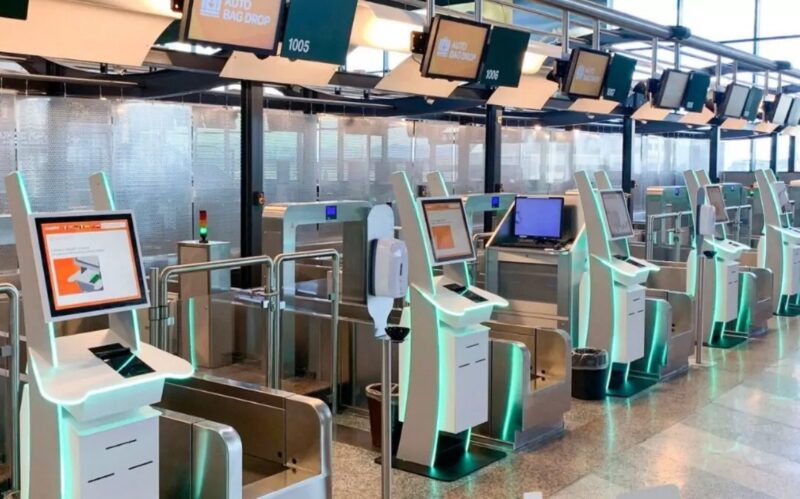
Automated bag drop kiosks do not require queue time, and passengers can use them without staff interference. These automated bag drop kiosks are also equipped with advanced technology to verify boarding passes in seconds, reducing check-in time.
The overall service time of automated backdrop kiosks is 2-5 minutes, making check-in efficient and user-friendly.
Passenger Experience
Automated bag drop kiosks, compared to staff-assisted help, are easier and more efficient. The ABD process is quite simple and requires no assistance, but it offers a positive passenger experience.
On the other hand, waiting in a queue line and relying completely on staff for check-in does not count as a positive passenger experience.
Operational Efficiency
One of the biggest problems faced by passengers in staff-assisted help is luggage mishandling and damage. There are also chances of theft as passengers can not monitor luggage processing. This problem reduces operational efficiency, and passengers are often worried about their luggage.
On the other side, automated bag drop systems carefully weigh luggage to avoid mishandling and damage. Since it’s a self-service process, the passengers can monitor their luggage process, preventing loss or theft.
Benefits of Automated Bag Drop Kiosks

Automated bag drop kiosks are innovative solutions to make check-in less time-consuming. The benefits of these kiosks include less waiting time, passenger independence, and reduced labor costs.
Shorter Wait Times
Automated bag drop kiosks reduce check-in times by eliminating queue lines and dependence on staff. The reduction in waiting time improves customer service and airline efficiency.
More Independence for Passengers
Most of the passengers are frequent flyers, and offering them automated self-check-in can give them more independence. This passenger independence will also result in fewer queue lines, reducing passenger overload in airport lobbies.
Reduced Labor Costs
By installing automated machines at airports, businesses can reduce labor costs as fewer staff will be required. By automating the check-in process and increasing passenger independence, airlines can reduce operational costs.
Automated bag drop kiosks require less maintenance, making them a one-time investment with longer profits.
Benefits of Staff Help
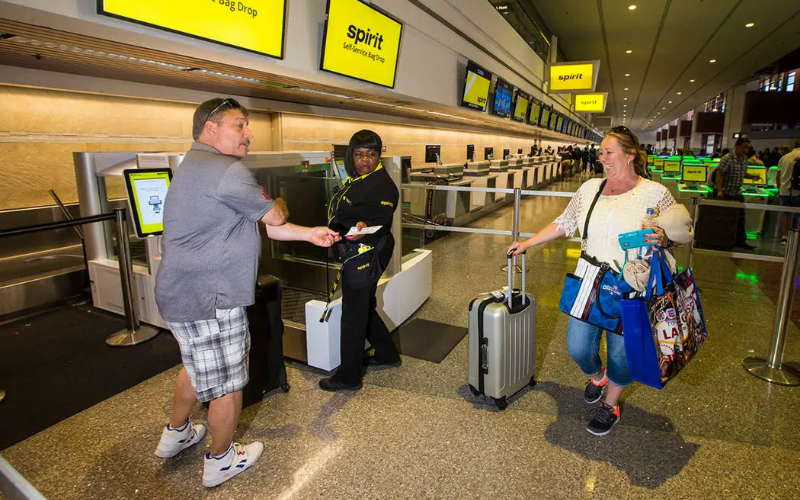
Staff help can benefit first-time flyers and offer assistance in complex scenarios. The importance of staff-assisted help proves we can not eliminate staff but integrate them with automated machines for efficiency.
Personalized Assistance
Passengers come from all backgrounds, such as first-time flyers, those who are less tech-savvy, and those with special needs. Staff can offer personalized assistance to these passengers.
Staff help can also make passengers feel valued and boost airline customer retention rates.
Better Handling of Complex Issues
Passengers can face complex challenges during the check-in process, such as overweight luggage and flight delays. These issues can be well handled by the staff.
Staff members are equipped with knowledge and communication skills, which makes them an appropriate solution for complex issues.
Comfort for First-Time Travelers
First-time flyers can feel overwhelmed and often lost during the check-in process. Staff help can guide them through the entire process and even teach them how to operate automated bag drop kiosks.
Challenges of Automated Bag Drop Systems
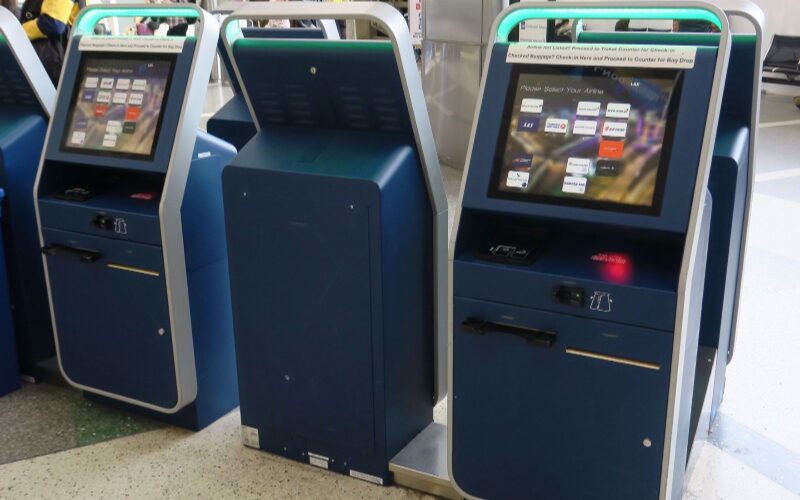
There are some challenges associated with automated bag drop systems, such as technological incompatibility and security concerns. The good news is that these challenges can be solved to improve the efficiency of the ABD system.
Technology Compatibility
Passengers might not be equipped with the technical skills to operate these machines, which may increase check-in time instead of reducing it. Regarding the airport system, one bug in the software can shut down the system, and the solution may take some time.
We can overcome this challenge by following these:
- Staff can guide passengers on how to use an automated bag drop system.
- The airport technical team can constantly check software and system functionality to avoid any unwanted system errors.
Adapting to Passenger Needs
It is tough to actively adapt these kiosks to passenger needs. Making them a bit tacky for passengers with special needs. Language incompetence can also put a hindrance between the ABD systems and passengers.
We can overcome this challenge by following these:
- Airports can introduce separate counters for passengers with special needs.
- Equip automated bag drop kiosks with multilingual support.
Security Issues
Cyber attacks on airport automated bag drop systems can steal customer information, posing a security issue. Passengers can also feel unsafe about feeding their personal data to machines.
We can overcome this challenge by following these:
- Airlines can equip their ABD system with end-to-end encryption and strict protocols to avoid cyber attacks.
- Raise awareness about the safety of machines to win passenger trust.
Future of Bag Drop Technology
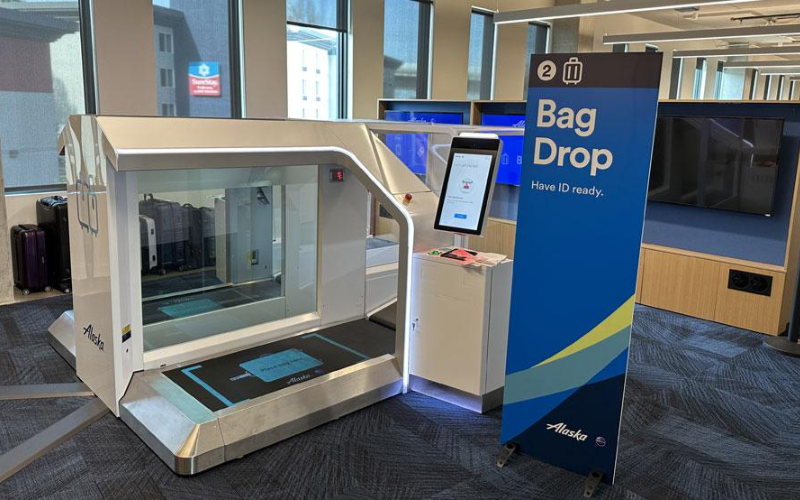
The future of bag drop technology looks promising with one-step and two-step processes and connected digital tools.
One-Step vs. Two-Step Systems
The one-step bag drop system consists of luggage tagging, weighing the luggage, and bag drop all at one counter.
On the other hand, the two-step system consists of luggage tagging and weighing at one counter and luggage drop at a second counter(ABD).
While a one-step system can make the process less complex, a two-step system can reduce process time, proving more efficient.
Airlines can introduce both systems and allow passengers to make their own choices.
Connecting with Digital Passenger Tools
In the future, technology can allow passengers to pre-tag their luggage using a connection between the ABD system and their mobile devices. Airlines can also integrate an automated bag drop system with AI to provide clear instructions and answer queries.
Conclusion
Automated bag drop kiosks make check-in easy and quick, benefiting airlines and passengers. Contact us to learn more about automated bag-drop kiosks. We guide our customers throughout the entire shopping process and also make custom kiosks.
.

Kitty Tan
Custom Kiosk Expert Consultant
Kitty is a kiosk expert at FlyXing. With extensive knowledge and experience in designing and manufacturing self-service kiosks, Kitty specializes in creating customized solutions to meet diverse industry needs.


