


Prescription dispenser
Table of Contents
Sign up to our newsletter
People used to solve the problem of queues by guesswork or by physically manipulating the situation. Nowadays, predictive analytics, machine learning, and AI all help to solve the queue length prediction with kiosks.
What is Queue Length Prediction?
The queue length prediction system uses the latest technology to measure the length of a certain queue. It determines the average time that customers or items will remain idle at a specific location or duration, respectively.
Predicting the length of the queue is very important for service businesses, which aim to improve the processes taking place and the client’s satisfaction.
How Queuing Theory Works
Queuing theory is the study of waiting lines through mathematical analysis. It originated in the twentieth century and is a combination of probability theory and operational research that analyzes how systems involving queues operate. It considers the following parameters:
Arrival Rate: The frequency at which customers or tasks join the queue.
Service Rate: The rate at which the services are rendered.
System Capacity: This limits the number of customers or tasks that can be held in the queue.
Queue Discipline: The sequence of rules or protocol for servicing the tasks in a queue, e.g., first-come-first-served basis.
When applied appropriately, queuing theory aids in trend spotting, forecasting, and system design to improve wait time with performance outcomes.
Why It Matters in Different Industries

Various industries are attaining their goals more effectively by emphasizing queue length prediction as one of the primary parameters.
Some of these are:
Retail: Pushing shoppers to checkout is frustrating. It can be reduced by predicting queue lengths and arranging for additional cashiers before peak sales.
Healthcare: Hospitals and clinics also perform this projection to control the number of patients in the system.
Airports: If airport premises manage to forecast security checkpoint lines, it will minimize waiting periods when the number of travelers are at peaks.
Entertainment: Theme parks can utilize queuing systems in their attraction places to guarantee best user experience.
It improves resource allocation, increases customer satisfaction, and minimizes costs.
Basics of Queuing Theory
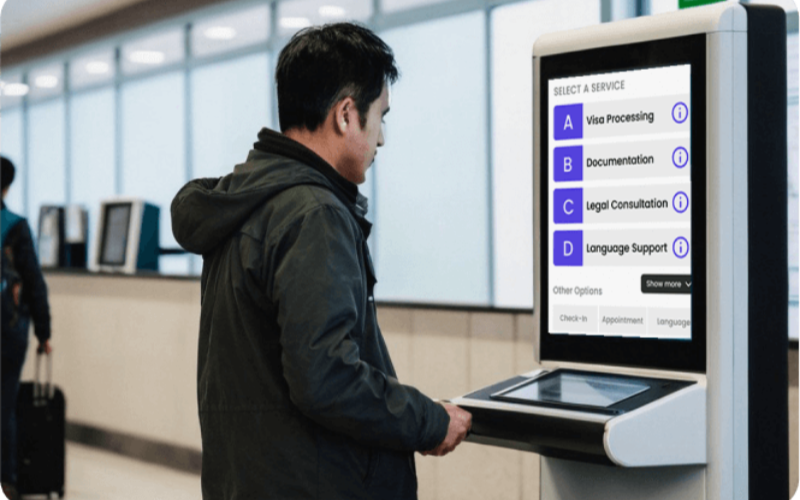
It is the mathematical study of queues. Prioritizing queuing systems among organizations contributes to businesses’ data analysis. The founder of queuing theory (Agner Krarup Erlang) analyzes mathematical models of queues, yielding a variety of equations.
Scientists have been focusing on business intelligence systems, characteristic models, and information infrastructure. They developed some generalized characteristics of deterministic and probabilistic queuing systems. It should be noted that these systems have the following general dependencies: availability, overhead capacity, congestion, and service time.
Key Models and How They Work
There is more than one queuing model, each designed for a specific case:
M/M/1 Model: This model operates under the assumption that arrivals are random and service times follow an exponential distribution. It is appropriate for low-volume traffic situations such as a kiosk operated by a single attendant.
M/M/c Model: This model is standard in call centers or bank counters, where agents operate simultaneously on incoming tasks.
M/G/1 Model: This model is appropriate for systems with variable service durations since it permits general service time distribution.
Priority Queues: In queuing models of this class, certain customers or tasks, such as VIPs, emergencies, etc., are prioritized over the others.
By studying these models, businesses may also be able to evaluate practical parameters such as the average length of queuing time, system economy, degree of load, and a number of other parameters that are specific to the system under study.
Using Predictions to Manage Queues
The ability to anticipate queue lengths is essential for making decisions:
Resource Allocation: Predictive models help businesses allocate employees, counters, or equipment during busy or quiet times.
Operational Planning: Time of employment shifts and resource allocation may be better planned so that there is minimum time wastage and more coverage is assured.
Customer Communication: Businesses can give precise wait time estimates because customers can relate this to real-time events, leading to greater satisfaction.
Using Neural Networks to Predict Queues
Artificial neural networks (ANNs) have introduced precision in predicting queue lengths. They are particularly suited for processing large data sets while assessing trends not captured by traditional models.
For instance, a common variant of an ANN known as a feedforward network. Such a network relies on past data and anticipated traffic numbers to ascertain the length of queues.
Another example is the Recurrent Neural Network (RNN) model. This type of sequence data model forecasts daily or hourly queues.
The latest deep learning techniques can improve predictive performance by integrating complex attributes such as seasonality, promotion, and customer reactions.
Using Kiosks for Queue Prediction

In recent years, self-service queuing kiosks have improved queue operations in the retail, healthcare, and transportation sectors. By merging the user’s engagement with real-time data collection, kiosks serve as service providers and predictive tools.
Techniques for Estimating Crowds in Real-Time
Modern kiosks utilize various technologies to assess and predict volumes of crowds and lengths of queues:
Computer Vision: Cameras analyze crowd density, movement, and coverage using image recognition algorithms.
IoT Sensors: Sensors installed in the kiosks can track foot traffic, crowding level, and other queue parameters.
Mobile Integration: Several kiosks are compatible with mobile applications, enabling clients to learn and be placed in an electronic queue via their mobile devices.
All these techniques allow businesses to understand the queue more and be more proactive in what they do.
How LSTM Networks Help with Predictions
A specific type of recurrent neural network is known as Long-Short-Term Memory (LSTM) networks. Due to their unique architecture, LSTMs can retain and reason about information over long periods, which is key in dealing with time-series problems.
A real-world example can be taken from an LSTM-based kiosk used in the amusement business. It could evaluate the expected wait time for rides based on previous logs, weather parameters, and the present inflow of visitors. In turn, this enables guests to enhance their overall experience by strategically assessing the timing of their visit.
How Kiosks Improve Queue Management

The kiosks are not only a predictive interface, but they also help address the queue by eliminating certain steps and enhancing customer contentment.
Estimating Crowds in Real-Time
The real-time crowd estimation helps businesses to:
- Round up ‘more’ employees when they are most likely to be needed.
- Contact customers in less busy areas or services.
- Broadcast warnings when the queue exceeds.
Shorter Waiting Times
Kiosks help businesses minimize customer wait times. For example:
- In any grocery store, the self-checkout kiosk significantly decreases the need for workers in the cashier line, shortening storefront processes.
- Kiosks used in airports facilitate the entire check-in and boarding processes; hence, offensiveness usually experienced at check-in counters is handled.
Better Experience for Customers
The overall customer experience is improved by kiosks:
- Providing personal services such as loyalty program integration or customized promotions.
- Offering visibility by showing wait times in real-time.
- Providing self-service functions that allow customers to control the nature of their engagement.
Problems with Queue Length Prediction
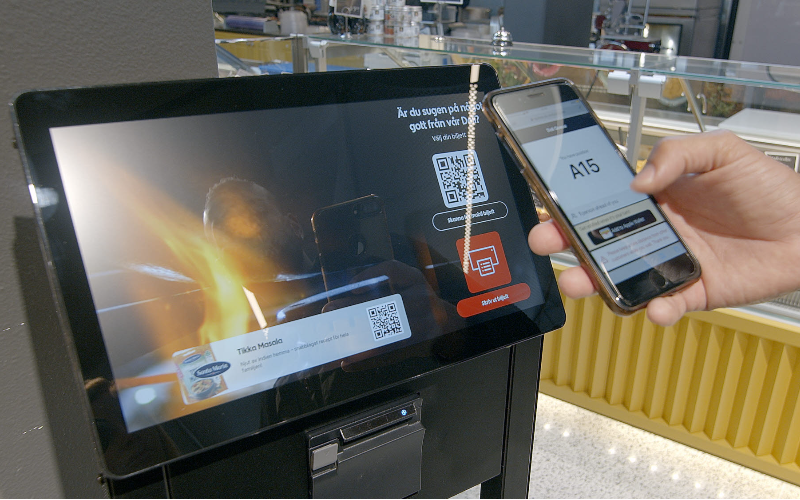
While predicting the length of queues presents certain advantages, businesses must also manage several additional factors to use their full potential.
Managing Large Crowds
Predictive systems can be easily thrown off by sudden, unexpected changes in volume. It may be due to a market crisis or a spike in interest in a certain product as a result of its promotional activities.
Therefore, businesses should have highly resilient systems capable of quickly adjusting to these conditions.
Making Models More Accurate
Businesses can introduce external variables like traffic data, weather forecasts, and event calendars to predict demand faster.
Adjusting During Busy Times
There are also spikes caused by holidays or large events, after which a modification should always be implemented to allow for varying conditions.
The Future of Queue Management
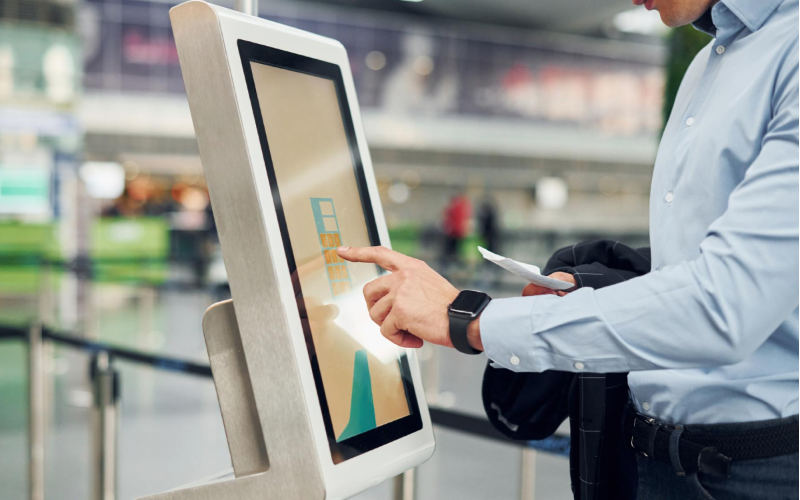
The future of queue management will involve adopting emerging technologies like artificial intelligence, machine learning, and the Internet of Things.
Adding Artificial Intelligence
AI will change the game by allowing for:
Enhanced Projections: Algorithms powered by artificial intelligence assess enormous datasets to discover trends and patterns.
Responding in the Moment: AI systems can modify predictions and advice based on real-time events.
Automation with AI: Built-in automated answers can be sent out by opening more counters or informing consumers of delays.
Using Predictive Tools for Better Decisions
The tools of the future will help organizations improve their decision-making:
Digital Twins: This allows organizations to experiment with different queue management strategies.
Augmented Reality (AR): It depicts queue data into a 3D model, making it easier for a manager to locate areas of congestion and devise effective ways of working.
Conclusion
Queue length prediction with kiosks helps to increase business value. It enhances customer prospects, improves process efficiency, and lowers operational costs.
Integrating concepts from queuing theory with kiosks, neural networks, and AI into organizations takes a more proactive approach to queue management.
The future is bright for queue management systems. Contact us today to learn more about how we can assist you to setup a best kiosk system for your business.

Kitty Tan
Custom Kiosk Expert Consultant
Kitty is a kiosk expert at FlyXing. With extensive knowledge and experience in designing and manufacturing self-service kiosks, Kitty specializes in creating customized solutions to meet diverse industry needs.


