


Prescription dispenser
Table of Contents
Sign up to our newsletter
This article will touch on everything about battery-powered kiosks. We will also provide tips to help you buy the best battery-powered kiosks.
 Battery-powered kiosks have several features that make them applicable for indoor and outdoor use. Let’s cover some of these features.
Battery-powered kiosks have various technical features that guarantee smooth and efficient functioning. Now, let’s look at those features in more detail:
The areas of application and use of battery-powered kiosks are many and versatile. Below are some common examples:
Firms can enjoy many advantages from battery-powered kiosks. Such advantages include mobility, ecological friendliness, and flexibility.
While battery-powered kiosks are very functional and versatile, they come with a fair deal of limitations and challenges that include:
In the future, digital signage technology will keep pushing battery-operated kiosks further. Below is a list of new directions and developments:
Battery-powered kiosks have several features that make them applicable for indoor and outdoor use. Let’s cover some of these features.
Battery-powered kiosks have various technical features that guarantee smooth and efficient functioning. Now, let’s look at those features in more detail:
The areas of application and use of battery-powered kiosks are many and versatile. Below are some common examples:
Firms can enjoy many advantages from battery-powered kiosks. Such advantages include mobility, ecological friendliness, and flexibility.
While battery-powered kiosks are very functional and versatile, they come with a fair deal of limitations and challenges that include:
In the future, digital signage technology will keep pushing battery-operated kiosks further. Below is a list of new directions and developments:
What are Battery-Operated Kiosks?
Kiosks are freestanding digital information or advertising display machines. Customers use kiosks to make purchases, return items, and enquire about information on products and services. Because they operate on batteries, kiosk batteries can offer much higher functionality than those that need to be plugged in at all times. These kiosks are designed to bring maximum portability and display versatility without the need for constant electricity. The versatility of battery-powered kiosks is particularly useful in temporary installations, outdoor events, retail, transportation, and any venue that requires mobile access to media. Some battery-operated kiosks feature interactive displays that allow customers to engage with them directly, while others display their content in a static or loop fashion. They usually have an HD display, some controlling software for screen content, and Wi-Fi, 4G, or Bluetooth connectivity. Such connectivity allows over-the-air content updates. One key factor about battery-powered kiosks is that they use less energy and are more ‘green’ for any business.Key Features of Battery Powered Kiosks
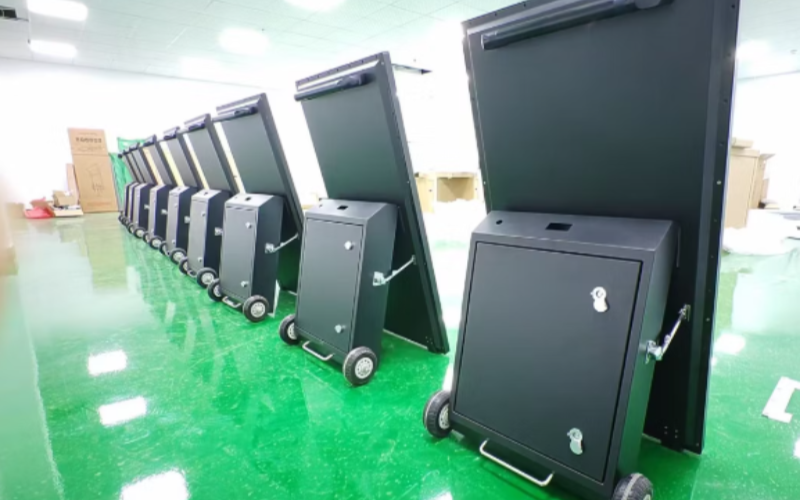 Battery-powered kiosks have several features that make them applicable for indoor and outdoor use. Let’s cover some of these features.
High Brightness Displays
One key feature of battery-powered kiosks is their high-brightness displays. This enables the kiosk to keep its content visible even in highly lit environments. For example, high brightness measures in anything upwards of 700 nits for indoor displays to upwards of 2000+ nits for outdoor kiosks. High visibility makes battery-powered kiosks suitable for places where the lighting condition varies from time to time. For instance, outdoor festivals or even shopping malls that deal with a great amount of natural light.Integrated Media Players
Most battery-operated kiosks are also installed with integrated media players that ensure high-resolution videos, images, and other multimedia files run without malfunctioning. This saves your business from using other external devices and provides an integrated, seamless user experience. Integrated media players may also support various content management systems that enable businesses to update their content remotely based on real data, existing promotions, or customer engagement metrics.Sturdy and Weatherproof Design
Battery-operated kiosks are made of weatherproof and sturdy material designed for outdoor or semi-outdoor environmental conditions. In general, the company of materials that constitute a battery-operated kiosk resists moisture and dust and can handle temperature fluctuations to serve under these conditions. Their anti-glare coating or tamper-resistant frames will give them better protection and longevity. This enhances the life of the kiosk. Such protection helps kiosks placed in areas with heavy traffic flow and exposure to weather conditions.Mobility and Ease of Placement
Due to their independence from fixed power sources, battery-powered kiosks have higher mobility. They are easier to move around the office depending on traffic flow or event setting. They are also very appropriate for temporary installations or events with a flexible layout. Most of these kiosks are mounted on wheels or lightweight casings that can easily be moved by one person. This flexibility reduces installation costs and enhances convenience.Technological Aspects of Battery-Powered Kiosks
 Battery-powered kiosks have various technical features that guarantee smooth and efficient functioning. Now, let’s look at those features in more detail:
Screen Size and Resolution (LCD and LED Options)
Display technology significantly affects the clarity, durability, and overall performance of a kiosk. Battery-operated kiosks have variants of LCD or LED displays, from compact 10″ to large-format 55″ ones. LCD is usually cheaper and does a great job when it comes to showing decent picture quality, while LED displays boast higher brightness and use significantly less energy. This makes LED displays perfect for outdoors and high-traffic areas. Their resolution can vary from regular HD up to ultra-high-definition 4K, depending on the content quality a customer needs.Operating Systems Variants (Android and Windows)
Most battery powered kiosks run on either an Android or a Windows-based operating system. Each operating system features advantages depending on its intended use. Android has gained popularity because of its affordable pricing and the wide range of apps it accommodates. For an enterprise environment where a company needs to show simple, interactive screens and for businesses trying to save money, an Android device becomes a cost-effective solution. Companies prefer Windows for higher functionality or security because it offers greater flexibility for specialized applications and can interface better with enterprise systems.Battery Life and Charging Requirements
It depends a lot on the model and usage. Most kiosks can last approximately 8 to 20 hours on one charge. However, advanced versions provide smart battery management through energy optimization that extends the operating time between charges. There are also varying charging solutions, such as fast charging or solar charging, which support businesses with high demands. In such scenarios, battery life and charging solutions go hand in hand, especially for outdoor events or remote locations where access to charging points might be difficult.Applications and Uses of Battery-Powered Kiosks
 The areas of application and use of battery-powered kiosks are many and versatile. Below are some common examples:
Indoor and Outdoor Settings
From shopping malls to museums, airports, and corporate offices, indoor battery-powered kiosks help people access information, directions, and product promotions. Aside from events, parks, and transportation nodes, you can place these devices in environments with limited or no outdoor electrical infrastructure.Advertising and Information Dispensing
Digital advertising is becoming prevalent as battery-powered kiosks are also becoming the medium for displaying interactive ad messages, video commercials, and branding. They serve as information-dispensing units for public locations, offering information on schedules, maps, and local attractions. For instance, you can place battery-powered kiosks in theme parks, zoos, or transport terminals.Event Management and Temporary Installations
These battery-operated kiosks are great for temporary events, such as trade show festivals or sports tournaments, as they help communicate with and manage visitors. They may provide event schedules, maps, and current updates to help visitors understand the flow of events. Some have ticketing or other registration capabilities, helping your business manage who has checked into an event and freeing up your staff.Benefits of Battery-Powered Kiosks
 Firms can enjoy many advantages from battery-powered kiosks. Such advantages include mobility, ecological friendliness, and flexibility.
Mobility and Flexibility
One of the most significant benefits of a battery-powered kiosk is the ease with which it can be mobilized. Since they do not have to be plugged into a stationary power supply, you can place battery-powered kiosks at any point with heavy traffic. You can move the device around when needed and even take it elsewhere. This is especially useful for businesses with seasonal or rotating events that call for temporary sets, such as retail pop-ups or outdoor promotional events.Environmental Impacts
Kiosks with batteries are greener than traditional digital signage devices because of their low power consumption. This decreases carbon emissions as these kiosks do not need to draw electric power to operate, thanks to their battery-dependent nature. Newer versions of various kiosks also allow for renewable energy sources, such as solar charging panels, which further lessen their impact on the environment.Lower Energy Costs
Besides reducing environmental impact, the battery-operated kiosks are economical as they consume less energy. While fixed kiosks draw power at all times, battery-powered units use only the quantity of energy required to recharge their batteries, hence reducing utility bills in the long run. To a company with many digital displays, such savings may be very beneficial as they can contribute to general cost-cutting.Challenges and Considerations
 While battery-powered kiosks are very functional and versatile, they come with a fair deal of limitations and challenges that include:
Battery Life and Management
A very important challenge is battery life, especially for kiosks placed in high-traffic or challenging environments. To solve this problem, you can leverage regular recharges. Also, ensure appropriate battery management for those times when outlets are unavailable. This means the type of kiosk model you select should meet the location demands to ensure minimum disruption.Weather Resistance in Outdoor Models
Kiosks used in outdoor settings will endure rain, dust, and temperature fluctuations. Most kiosks designed to work outdoors feature strong weatherproofing. However, for extreme conditions, you might need to use other protection measures. For example, insulation will be needed for extremely cold climates and heat-resistant materials for scorching climates.Technological Maintenance
Like other digital technologies, battery-operated kiosks also require routine maintenance to work effectively. This will involve software updates, maintenance of hardware issues, and keeping the media player and battery system up to date. Your business should provide a maintenance plan to handle these factors and make kiosks run with minimal downtime.Connectivity Issues
The general wireless connections that kiosks use to update content or relay usage data include Wi-Fi or mobile data. Of course, this may not be easy in areas with poor connectivity. Connectivity issues can affect how well the kiosk can display information in real-time and the possibility of operating it as an interactive unit. These are some factors to consider as you set up the kiosk.Expected Technological Trends for Battery-Powered Kiosks
 In the future, digital signage technology will keep pushing battery-operated kiosks further. Below is a list of new directions and developments:
IoT and AI Integration
In the future, battery-operated kiosks will be integrated with IoT sensors and AI technologies for better user experiences. For instance, AI might enable kiosks to show personalized content based on user demographics, while IoT sensors may monitor environmental conditions to adjust display brightness or refresh content.Improved Battery Technologies
As battery technology keeps improving, the battery life of these kiosks will also get better, thus reducing the need for recharging. Innovations such as lithium-sulfur batteries, which boast higher energy densities than traditional lithium-ion batteries, are expected to enhance kiosk efficiency and durability.Augmented Reality (AR) Capabilities
AR can increase the interactiveness of battery-powered kiosks by leveraging AR-enabled screens. This will allow users to manipulate virtual objects or scan enhanced information that could yield memorable and immersive experiences.Conclusion
Battery-powered kiosks will soon become the signature of modern digital signage solutions. Their flexibility, ecological compatibility, and independence from stationary sources of electricity make them very attractive for a wide range of services, from retail to events and outdoor advertising. Though some challenges exist in this field, like battery management and connectivity, their benefits outweigh the limitations. For more help buying the best kiosk machine for your business, schedule a call with us at Bestkiosk. Do so today and enjoy a free quote.
Kitty Tan
Custom Kiosk Expert Consultant
Kitty is a kiosk expert at FlyXing. With extensive knowledge and experience in designing and manufacturing self-service kiosks, Kitty specializes in creating customized solutions to meet diverse industry needs.
